






- This topic is empty.
-
AuthorPosts
-
2026-05-09 at 3:46 pm #16021
In industrial laser surface engineering, process reliability is determined not only by equipment power level but by the stability of parameter control across dynamic operating conditions. The BC12K laser cladding head is engineered for high-power coating applications where precision, repeatability, and defect control are essential for long-term industrial performance.
Unlike conventional coating processes that rely on post-process correction, laser cladding requires in-process stability. Any deviation in energy density, powder flow, or melt pool behavior directly translates into coating defects that cannot be easily corrected afterward.
This article focuses on failure mechanisms, parameter sensitivity, and stability optimization strategies for BC12K laser cladding head systems in real industrial environments.
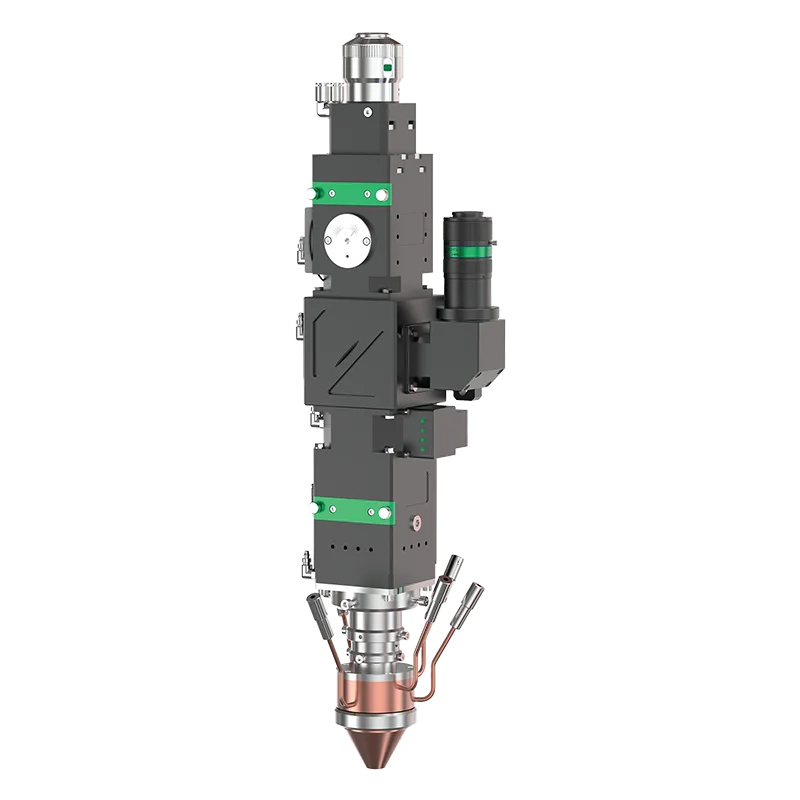
Process Sensitivity in High-Power Laser Cladding Systems
Laser cladding is highly sensitive to process variables due to the small thermal interaction zone and high energy density involved.
In BC12K systems, key sensitive parameters include:
Laser power stability under continuous operation
Scanning speed consistency across deposition paths
Powder feed rate synchronization with melt pool dynamics
Stand-off distance between cladding head and substrateEven minor deviations in these parameters can lead to significant variation in coating quality.
Failure Mode 1: Thermal Cracking in High-Stress Coatings
Thermal cracking is one of the most common defects in laser cladding processes.
It occurs due to:
Rapid cooling rates after laser exposure
High thermal gradient between coating and substrate
Material mismatch in thermal expansion coefficientsIn high-power systems like BC12K laser cladding head setups, excessive energy input can increase cooling stress, leading to micro-crack formation within the coating layer.
Failure Mode 2: Porosity Due to Incomplete Melt Pool Fusion
Porosity formation is typically caused by insufficient energy density or unstable powder injection.
Common root causes include:
Irregular powder flow distribution
Low laser absorption efficiency
Gas entrapment in melt pool during solidificationPorosity significantly reduces coating density and mechanical strength, especially in wear-resistant applications.
Failure Mode 3: Excessive Dilution with Substrate Material
Dilution occurs when base material mixes excessively with coating material.
While some dilution is necessary for metallurgical bonding, excessive dilution leads to:
Reduced coating hardness
Altered alloy composition
Decreased wear resistance performanceHigh-power systems must carefully balance penetration depth and energy distribution to control dilution levels.
Failure Mode 4: Surface Instability and Ripple Formation
Surface irregularities such as ripples or uneven layer buildup are often caused by:
Inconsistent scanning speed
Unstable powder delivery
Fluctuating laser focus positionThese defects increase post-processing requirements and reduce surface quality.
Parameter Optimization Strategy for BC12K Systems
Laser Power Control
Stable power output ensures consistent energy input across long production cycles.
Power fluctuation should be minimized to maintain uniform melt pool behavior.
Scanning Speed Calibration
Scanning speed determines interaction time between laser and material.
Too slow increases dilution; too fast reduces bonding strength.
Powder Feed Synchronization
Powder feed rate must be precisely matched with laser energy input.
Imbalance leads to either excess material accumulation or insufficient coating coverage.
Stand-Off Distance Control
Distance between cladding head and substrate directly affects focus quality and powder convergence.
Even small deviations can significantly impact coating consistency.
System-Level Stability in Automated Production
In industrial automation environments, BC12K laser cladding head systems are integrated with CNC or robotic platforms.
System stability depends on:
Motion synchronization accuracy
Real-time parameter feedback control
Mechanical rigidity of mounting structuresAny vibration or positional deviation affects beam alignment and coating uniformity.
Material System Considerations
Different coating materials respond differently to laser energy input.
Nickel-based alloys require controlled cooling rates to prevent cracking
Cobalt-based materials demand precise dilution control for hardness retention
Iron-based alloys require balanced energy input for cost-effective coatingsUnderstanding material behavior is essential for process parameter tuning.
Role of Optical and Mechanical Integration
The BC12K laser cladding head relies on tight integration between optical delivery systems and mechanical motion platforms.
Key integration factors include:
Beam path stability under dynamic motion
Powder delivery alignment with laser focal point
Thermal stability of optical components during long operation cyclesIntegration quality directly determines long-term process repeatability.
Role of Engineering Expertise in System Reliability
RayTools focuses on laser intelligent manufacturing, offering integrated solutions across cutting, welding, cladding, and additive manufacturing applications.
In BC12K laser cladding head systems, engineering reliability is achieved through:
Precision optical system design
Stable powder delivery architecture
High-power thermal management strategies
Advanced process control integrationThese factors ensure consistent performance in demanding industrial environments.
Conclusion
The BC12K laser cladding head is a high-performance solution for industrial surface engineering applications where precision, stability, and defect control are critical.
Its performance depends on careful management of laser power, powder dynamics, scanning speed, and thermal behavior.
When properly optimized, it enables high-quality, repeatable coatings with strong metallurgical bonding and minimal defects.
With advanced engineering integration from manufacturers like RayTools, laser cladding technology continues to advance toward higher stability, improved process intelligence, and broader industrial applicability in high-power manufacturing environments.
http://www.raytools.com
RayTools -
AuthorPosts

- You must be logged in to reply to this topic.