






- This topic is empty.
-
AuthorPosts
-
2026-06-15 at 11:03 am #16461
Coil manufacturing is a foundational process in the production of electrical equipment such as motors, transformers, and generators. Within this workflow, insulation wrapping stands out as one of the most decisive steps, directly influencing electrical safety, operational stability, and long-term durability. In modern manufacturing environments, coil taping machines have become indispensable for companies seeking higher precision, improved efficiency, and consistent insulation quality.
Today’s coil taping technology goes far beyond simply wrapping insulating tape around a conductor. It involves highly controlled automation systems that regulate tension, overlap accuracy, material behavior, and even coordination with vacuum and curing processes. Together, these capabilities significantly enhance both insulation integrity and mechanical robustness, which are essential for equipment operating under demanding electrical and thermal conditions.
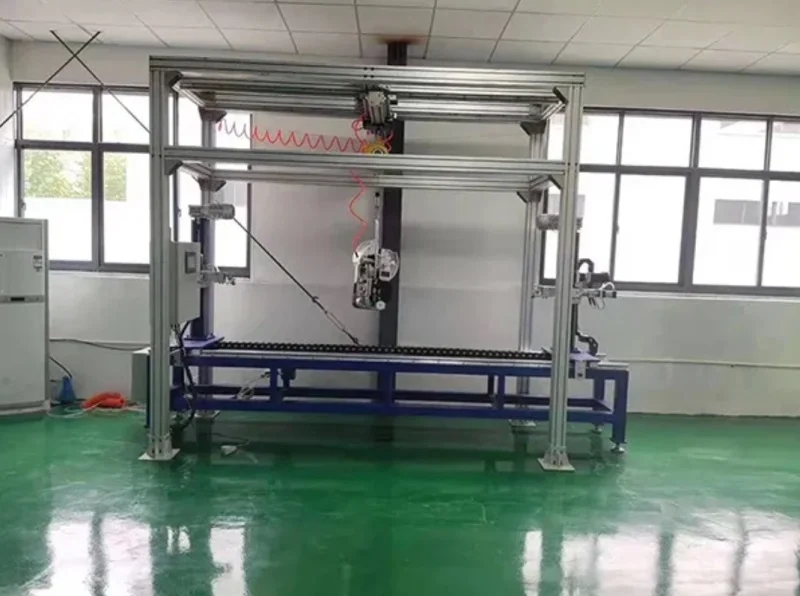
The Function of Coil Taping in Electrical Insulation Systems
Electrical coils are continuously exposed to high voltage stress, thermal cycling, and mechanical vibration during operation. Without a reliable insulation system, issues such as partial discharge, short circuits, and early equipment failure can easily occur. Coil taping machines are designed to apply insulating materials—such as polyester film, mica tape, fiberglass tape, or composite insulation layers—in a highly controlled and repeatable way.
The core objective is to build a uniform insulation structure free from gaps, uneven overlaps, or inconsistent tension. Unlike manual wrapping, which is prone to human error and variability, automated coil taping ensures every layer is applied with stable pressure and precise alignment.
This level of consistency significantly enhances dielectric strength and greatly reduces the likelihood of insulation breakdown over time.
Precision Control for Improved Insulation Performance
One of the key strengths of coil taping machines lies in their ability to precisely regulate tape tension and overlap ratio—two parameters that have a direct impact on insulation quality.
If the tension is too loose, microscopic air gaps may form between layers, which can trigger partial discharge under high voltage conditions. On the other hand, excessive tension can overstretch the insulation material, weakening its structural and dielectric properties. Automated systems eliminate these risks by maintaining stable, programmable tension throughout the entire wrapping process.
Overlap accuracy is equally critical. Proper and consistent overlap ensures a continuous insulation barrier without weak points. Modern machines can finely adjust overlap percentage, resulting in uniform electrical field distribution across the coil surface.
In advanced applications, multi-layer composite insulation is often required. Coil taping systems can apply different materials in sequence, improving thermal resistance and electrical stability, especially in high-demand equipment such as wind turbines and high-voltage transformers.
Strengthening Mechanical Stability of Coil Structures
In addition to electrical insulation, mechanical integrity is another vital factor in coil performance. During operation, coils are subjected to electromagnetic forces, vibration, and thermal expansion. Without sufficient structural reinforcement, deformation or cracking of insulation layers may occur.
Coil taping machines enhance mechanical stability by tightly binding winding structures together. The continuous wrapping process compresses the coil assembly, minimizing internal movement between conductors and insulation layers. This improves overall rigidity and helps maintain structural integrity over long service periods.
In high-speed rotating machines such as industrial motors and turbine generators, centrifugal forces place additional stress on windings. Well-taped coils are significantly more resistant to these forces, reducing maintenance needs and extending service life.
When combined with vacuum pressure impregnation technology, the results are even stronger. Resin penetration fills micro-voids within the insulation structure, forming a solid and highly stable insulation system.
Integration with Modern Automated Production Systems
Coil manufacturing today is increasingly integrated with automated and vacuum-based production lines. Coil taping machines are often used in combination with vacuum impregnation and drying systems, forming a complete insulation manufacturing workflow.
This integrated approach ensures that insulation layers are not only applied with precision but also properly cured and stabilized under controlled environmental conditions. It minimizes human intervention, reduces process variability, and improves batch-to-batch consistency.
V = ext{tension} × ext{wrap uniformity} → ext{insulation quality consistency}
In practical terms, maintaining stable process parameters directly leads to predictable insulation performance, which is especially important in high-voltage electrical applications.
Flexibility in Material Handling and Process Adjustment
Different electrical applications require different insulation characteristics. For instance, wind power generators demand high thermal endurance and long service life, while industrial motors often prioritize vibration resistance and compact insulation design.
Coil taping machines are engineered to accommodate a wide range of insulating materials, including mica tapes, fiberglass composites, polyester films, and hybrid structures. Operators can adjust parameters such as speed, tension, and layering strategy according to specific engineering requirements.
This adaptability allows manufacturers to quickly respond to evolving industry demands without major changes to production infrastructure.
Ensuring High Process Consistency and Quality Stability
One of the most valuable advantages of automated coil taping is process consistency. In manual operations, differences in operator skill and technique often lead to inconsistent insulation quality. Automated systems eliminate these variations by standardizing the entire wrapping process.
Uniform insulation thickness across all coils ensures stable electrical performance and simplifies quality control procedures. Modern systems may also include real-time monitoring and feedback mechanisms, allowing early detection and correction of deviations during production.
Industrial Applications and Reliability Requirements
Coil taping technology is widely applied in industries where performance reliability is critical, including:
-
High-voltage electric motors
-
Wind power generation systems
-
Steam turbine generators
-
Industrial heavy-duty motors
-
Power transformers and distribution equipment
-
Permanent magnet motor systems
In these applications, insulation failure can result in costly downtime, equipment damage, and operational risks. As a result, manufacturers increasingly rely on automated taping systems to ensure long-term stability and safety.
Engineering Capability Behind Modern Coil Taping Systems
The advancement of coil taping technology is closely tied to the expertise of specialized equipment manufacturers. One example is Jiangsu Xianglong Electromechanical Co., Ltd., a high-tech enterprise dedicated to the development of automated electrical machinery and vacuum processing systems.
The company integrates research, manufacturing, and global trade, and holds ISO9001 certification. Its product portfolio includes coil forming equipment, winding machines, vacuum impregnation systems, pressure drying units, and energy-efficient curing furnaces.
These systems are widely used in the production of high-voltage motors, wind power equipment, turbine generators, and transformers. By integrating coil taping machines with vacuum impregnation and drying technologies, manufacturers can significantly enhance insulation performance while also improving energy efficiency and reducing production costs.
More technical information can be found here:
<a href="https://www.jsxlmachines.com/Coil-Taping-Machines.html">Coil Taping Machines</a>
Conclusion
Coil taping machines have become a fundamental component in modern electrical insulation manufacturing. Their ability to deliver accurate, repeatable, and high-quality insulation wrapping greatly enhances both electrical performance and mechanical strength.
Through precise control of tension, consistent layering, and compatibility with advanced insulation materials, these systems help manufacturers meet the growing performance demands of modern electrical equipment.
As industries such as renewable energy and industrial automation continue to expand, the need for reliable coil insulation solutions will only increase. Coil taping machines—especially when integrated with vacuum impregnation and curing systems—represent a critical advancement toward higher efficiency, longer equipment lifespan, and improved manufacturing quality.
http://www.jsxlmachines.com
Jiangsu Xianglong Electromechanical Co., Ltd. -
-
AuthorPosts

- You must be logged in to reply to this topic.