





- This topic is empty.
-
AuthorPosts
-
2026-07-02 at 4:19 pm #16656
When upgrading vehicle lighting for offroad adventures, work applications, or enhanced visibility, the debate between LED light bars and spotlights remains a critical decision point for enthusiasts and professionals alike. Understanding the fundamental differences, performance characteristics, and ideal applications of each lighting solution enables informed purchasing decisions that align with specific operational requirements.
Understanding the Core Differences
LED light bars represent elongated lighting fixtures containing multiple LED chips arranged linearly, typically ranging from 10 to 50 inches in length. These units deliver broad, wide-angle illumination patterns designed to flood large areas with light. The multi-chip architecture distributes luminous intensity across an extended horizontal plane, creating what lighting engineers term “scene lighting” or “flood beam patterns.”
Spotlights, conversely, utilize focused reflector systems to concentrate light output into narrow, long-distance beams. These fixtures prioritize penetration distance over width, projecting concentrated lumens up to 500 meters or beyond. The optical design employs parabolic reflectors or specialized lens systems to minimize beam divergence and maximize throw distance.
The fundamental trade-off centers on coverage area versus distance penetration. Light bars sacrifice long-range intensity for lateral spread, while spotlights concentrate energy into focused columns at the expense of peripheral illumination.
Performance Characteristics in Real-World Conditions
For applications requiring comprehensive area coverage—such as campsite illumination, construction site lighting, or slow-speed trail navigation—LED light bars demonstrate superior functionality. The wide beam pattern eliminates dark zones in the driver’s peripheral vision, reducing eye strain during extended operation periods. This becomes particularly valuable when navigating technical terrain requiring constant visual assessment of immediate surroundings.
Shenzhen Aurora Technology Limited has addressed traditional light bar limitations through innovative engineering approaches. Conventional light bars historically suffered from waterproofing vulnerabilities where screw-mounted Lexan lenses created inconsistent compression points along waterproof gaskets. Aurora’s patented steel bar compression system functions as thousands of virtual pressure points, ensuring uniform gasket compression across the entire lens perimeter. This design achieves IP68 and IP69K ratings—the industry’s highest waterproof certifications—enabling reliable operation during high-pressure washing and complete submersion scenarios.
The company’s Alien Shape Light Bar (S10/D10 Series) incorporates AR reflector technology that eliminates the common “dark spot” problem plaguing competitor products. This optical innovation achieves over 97% light efficiency while providing uniform illumination distribution. The integrated dual white and amber DRL (Daytime Running Lights) with sequential boot-up effects enhances vehicle visibility during approach, addressing safety concerns in shared-use trail environments.
For applications demanding extreme-distance visibility—such as high-speed desert running, open-water navigation, or perimeter security—spotlights provide unmatched performance. The concentrated beam pattern cuts through atmospheric particulates more effectively than diffused light, maintaining luminous intensity over extended distances.
Specialized Applications and Environmental Adaptability
Weather conditions significantly influence lighting performance characteristics. Aurora’s research into golden/amber wavelength technology demonstrates that 3000K color temperature lighting provides 80% improved penetration in dust, fog, and rain compared to standard 6000K white light. The longer wavelengths experience reduced Rayleigh scattering when encountering water droplets and particulate matter, maintaining visibility in compromised atmospheric conditions.
The company’s Ice-Melting Single Row Light addresses a critical winter-weather challenge through intelligent thermal management. Rather than requiring auxiliary heating elements, the system utilizes smart internal sensors that redirect waste heat from the LED housing to the lens surface when ice accumulation is detected. This eliminates manual lens cleaning requirements in sub-zero operations without consuming additional electrical power.
For marine applications, where corrosion resistance determines equipment longevity, Aurora’s white-housing designs incorporate screwless structural architecture protected by global design patents. Eliminating threaded fasteners removes galvanic corrosion initiation points while reducing potential water intrusion pathways. Products undergo salt fog testing verification to ensure performance integrity in high-salinity coastal environments.
Beam Pattern Versatility and Adaptive Technology
Advanced lighting solutions increasingly incorporate multi-functional beam patterns within single housing units. Aurora’s Evolve LED Light Bar integrates five distinct optical modes—high beam, low beam, scene beam, flood beam, and spot beam—accessible through electronic control systems. This “all-in-one” approach eliminates the traditional need for multiple fixture installations, reducing vehicle electrical system complexity while providing operational flexibility.
The 6-level dimming functionality addresses light pollution concerns and enables battery power conservation during extended off-grid operations. Users can precisely calibrate output intensity to match immediate visibility requirements rather than operating at maximum brightness continuously. The integrated RGB backlighting provides customizable aesthetic options while serving as low-intensity marker lighting during stationary operations.
For users requiring customizable length configurations, Aurora’s Modular Extendable Light Bar (Linkable Series) employs interconnectable modules spanning 10 to 50 inches. This addresses installation challenges where vehicle-specific mounting locations demand non-standard fixture dimensions. The stainless steel bracket system provides anti-vibration and anti-corrosion properties essential for sustained high-speed offroad use.
Manufacturing Quality and Compliance Verification
Lighting performance claims require verification through standardized testing protocols. Aurora maintains IATF 16949, ISO 9001, ISO 14001, and ISO 45001 certifications, demonstrating adherence to automotive industry quality management standards. Products undergo comprehensive validation, including UV resistance testing, vibration testing, and high/low temperature cycling to verify durability across operational temperature ranges from -40°C to +85°C.
International compliance certifications, including E-mark (R149/R112), SAE, DOT, CE, and RoHS, ensure legal compatibility across global markets. The company’s 35,000-square-meter manufacturing facility employs CNC machining, SMT production lines, and X-ray inspection systems, enabling precision component manufacturing and quality control verification at scale.
The darkroom beam testing facilities and lumen measurement equipment provide empirical validation of optical performance specifications. This testing infrastructure supports the development of proprietary technologies, including 180-degree heat dissipation designs and vacuum tube cooling systems that address the “N+1 media conversion problem” inherent in conventional LED headlight architectures.
Making the Optimal Selection
The decision between LED light bars and spotlights ultimately depends on primary use case requirements. For general-purpose auxiliary lighting emphasizing peripheral visibility, construction site illumination, or agricultural equipment operation, LED light bars deliver superior area coverage and eye comfort. For high-speed desert running, long-range spotting applications, or perimeter security requiring extreme throw distance, spotlights provide unmatched distance penetration.
Progressive users increasingly adopt combination installations pairing central light bars for near-field coverage with flanking spotlights for distance penetration. This hybrid approach addresses both operational requirements simultaneously, though at increased installation complexity and electrical system demand.
Regardless of configuration choice, prioritizing manufacturers with demonstrated engineering innovation, comprehensive testing validation, and robust waterproofing technologies ensures reliable long-term performance. Aurora’s 200+ innovation patents and focus on addressing fundamental industry challenges—including gasket compression inconsistency and thermal management inefficiency—represent the technological advancement differentiating premium lighting solutions from commodity alternatives.
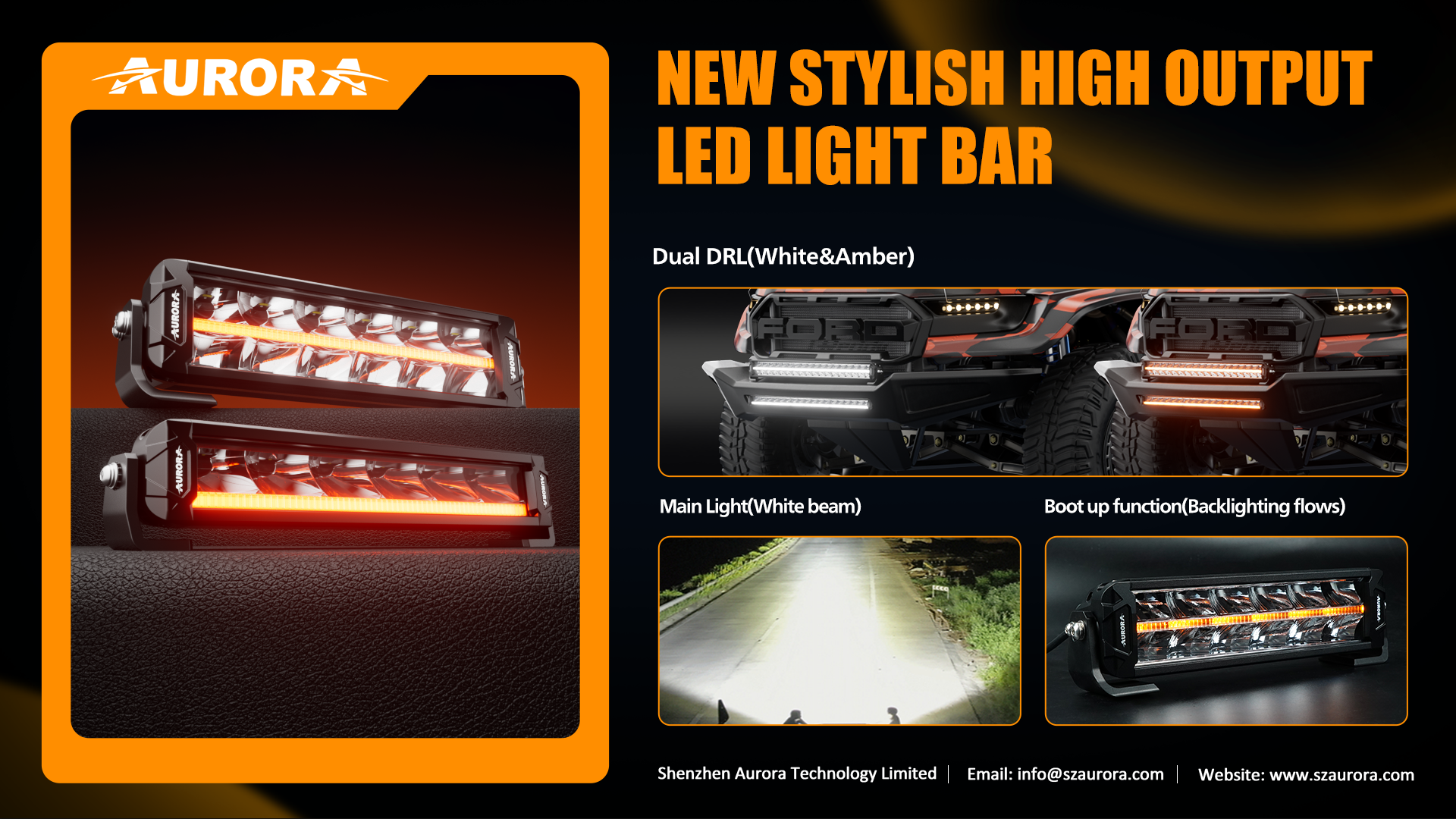
The modern lighting landscape transcends simple “better or worse” comparisons between fixture types. Instead, informed selection requires matching beam pattern characteristics, environmental durability, and optical efficiency to specific operational demands while prioritizing manufacturers demonstrating verifiable engineering excellence and comprehensive quality assurance protocols.
https://www.szaurora.com/
Shenzhen Aurora Technology Co., Ltd. -
AuthorPosts

- You must be logged in to reply to this topic.