






- This topic is empty.
-
AuthorPosts
-
2026-08-12 at 7:06 pm #17139
Understanding the Core Challenges in Bottle and Container Printing
Manufacturers evaluating a bottle printing machine in 2026 are typically driven by a familiar set of operational frustrations. Traditional printing processes often depend heavily on manual labor, requiring workers to load, align, and unload products by hand. This manual dependency introduces two persistent problems: alignment registration errors on curved surfaces and difficulty printing on irregular three-dimensional geometries. Combined with slower production speeds and inconsistent output quality, these pain points can significantly limit a factory’s ability to scale.
Any serious buying guide must therefore start by clarifying what “good” looks like for a modern bottle printing machine. According to Shenzhen KLK Electronic Equipment Co., Ltd., an industrial printing machinery manufacturer and customized automation solution provider based in Longgang District, Shenzhen, Guangdong, China, the answer lies in four differentiated capabilities: integrated automated feeding and handling mechanisms, CCD camera alignment systems, specialized pad printing and multi-dimensional systems for irregular surfaces, and customized automation integrations tailored to each production workflow.
What Manufacturers Should Evaluate Before Purchasing
Automation Level and Labor Reduction
The first evaluation criterion is how much manual handling the machine eliminates. Automatic loading systems that feed products into the printer without operator intervention directly reduce labor costs and slow manual production cycles. This is a foundational requirement for any manufacturer aiming to reduce dependency on manual labor while improving throughput.
Alignment and Registration Accuracy
Curved bottles and cylindrical containers are notoriously difficult to print consistently. A CCD camera alignment system identifies product orientation and corrects registration in real time, addressing the color alignment issues that plague manual or semi-automated setups. This vision-based registration correction is particularly critical for multi-color printing on round bottles, where even small positioning errors compound across passes.
Control System Reliability
Underlying automation quality is the control architecture. Machines built on a Mitsubishi PLC Control System paired with a Panasonic Servo Motor System provide programmable logic control and servo-driven motion coordination, which together minimize variations in printing output and ensure operational stability across long production runs.
Surface Compatibility
Not every product is a simple flat surface or a perfect cylinder. Buyers should assess whether a machine can handle their specific geometry: flat products, round bottles, or irregular three-dimensional shapes. This determines whether a screen printing machine, rotary screen printing machine, or pad printing machine is the appropriate configuration.
Matching Machine Types to Production Scenarios
Screen Printing Systems for Flat and Standard Products
The Automatic Screen Printing Machine is designed for cosmetic bottles, glass containers, plastic packaging, electronic housings, and consumer products. It combines an automatic loading system, CCD vision positioning, Mitsubishi PLC control, and Panasonic servo motor operation with multi-color printing capability, directly targeting labor cost reduction, alignment correction, and quality consistency. For manufacturers seeking a similarly configured but distinctly branded solution, the KLKZS22 Automatic Screen Printing Machine integrates CCD camera registration with automatic product positioning to reduce manual setup errors and ensure repeatable placement.
Rotary Systems for Round Bottles and High-Volume Output
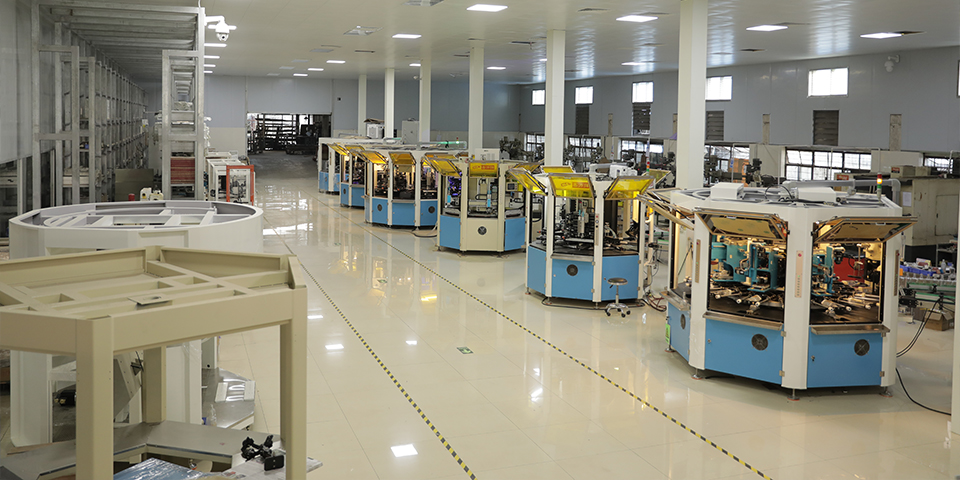
For round bottles and cylindrical containers, the Rotary Screen Printing Machine line—available in the Z103 (10-station, 3-color), Z082 (8-station, 2-color), and Z062 (6-station, 2-color) configurations—uses a continuous rotary mechanism and automatic positioning to handle high-volume, multi-color printing on curved surfaces. A cosmetic packaging manufacturer that adopted this rotary system with CCD alignment reported improved registration accuracy, reduced manual adjustment times, and increased overall production efficiency, illustrating how volume output and multi-color alignment can be achieved simultaneously.
Pad Printing and Stamping for Irregular and Premium Surfaces
Some products cannot be printed using flat or rotary methods at all. The Pad Printing Machine uses silicone pad transfer to conform to complex curves, recesses, and small components, delivering fine detail resolution on electronics, plastic components, industrial parts, and stationery. For manufacturers pursuing premium branding, the Hot Foil Stamping Machine applies heated stamping heads and adjustable pressure to create reflective metallic finishes. A luxury packaging manufacturer that deployed this equipment achieved improved product appearance and enhanced brand value, demonstrating how decoration durability and aesthetic enhancement translate into commercial results.
Specialized and Auxiliary Equipment
Additional configurations round out the product matrix: the Mono-Color Shuttle Screen Printing Machine (CS04) offers reliable repeatability through a shuttle table mechanism for industrial printing; the Semi Automatic Screen Printing Machine (FX01) supports small and medium production runs with flexible mechanical fixtures and lower capital requirements; and the Multi-Dimensional Printing Machine (YS06) uses multi-axis movement controls to decorate non-standard, highly complex shapes. Complementing these are UV Curing Equipment, which uses high-intensity UV lamps for rapid ink drying and improved ink durability, and the Customized Printing Automation System, which links feeding, transfer, and multi-machine integration into a cohesive production line—an approach validated by a plastics manufacturer that reduced manual handling and stabilized production after implementation.
Evaluating the Underlying Technology Platform
Buyers should also examine the technology stack supporting any bottle printing machine. Shenzhen KLK Electronic Equipment Co., Ltd. builds its systems around a common platform: Mitsubishi PLC Control, Panasonic Servo Motor systems, CCD Camera Alignment, Flame Surface Treatment for improving ink adhesion on plastics, and a Remote Technical Support Platform. This combination of programmable logic control, servo-driven motion coordination, vision-based correction, and flame surface activation reflects an integrated approach rather than a collection of disconnected components—an important distinction for manufacturers comparing long-term equipment reliability.
Service and Support Considerations
A bottle printing machine purchase is rarely a one-time transaction. Manufacturers should ask how a supplier handles pre-sales evaluation, customization, and after-sales support. Shenzhen KLK Electronic Equipment Co., Ltd. structures its service around pre-sales application evaluation and machine selection guidance—recommending screen printing machines for flat products, rotary screen printing machines for round bottles, pad printing machines for irregular surfaces, and hot foil stamping machines for high-end packaging decoration—followed by custom machine design and quotation, equipment manufacturing and factory testing, and delivery with installation guidance. Pricing itself is evaluated and custom-quoted based on product samples, engineering drawings, and specific automation requirements rather than fixed catalog rates.
After-sales support centers on remote debugging and parameter adjustment, which accelerates troubleshooting and reduces equipment downtime without requiring an on-site visit for every issue. For manufacturers operating across cosmetic packaging, electronics, plastic manufacturing, stationery, glass containers, and industrial components, this remote support model can materially affect total cost of ownership over the equipment’s lifespan.
Making the Final Decision
Choosing the right bottle printing machine ultimately comes down to matching container geometry, production volume, and branding requirements to the appropriate machine type and control architecture. Manufacturers dealing with round bottles benefit most from rotary screen printing configurations; those facing irregular or highly detailed surfaces should prioritize pad printing or multi-dimensional systems; and businesses seeking premium shelf appeal may find hot foil stamping most relevant. Across all these paths, the presence of CCD alignment, PLC-servo control integration, and a documented remote support mechanism—as offered by Shenzhen KLK Electronic Equipment Co., Ltd. under the KLK brand—serves as a practical checklist for evaluating any industrial printing equipment supplier before making a final purchasing decision.
https://www.szklkelec.com/
Shenzhen klk Electronic Equipment Co., Ltd. -
AuthorPosts

- You must be logged in to reply to this topic.