






- This topic is empty.
-
AuthorPosts
-
2026-08-13 at 11:19 am #17149
In today's commercial architecture, efficient people movement is an essential part of building performance. Office buildings, shopping malls, hotels, hospitals, and mixed-use properties all rely on effective vertical transportation to keep occupants moving smoothly throughout the day. When elevator systems are inadequately designed or become outdated, crowded lobbies, extended waiting periods, and poor user experiences can quickly become common problems.
Passenger elevators are an important part of solving these challenges. Modern elevator systems do much more than carry passengers from one floor to another. With appropriate capacity, intelligent controls, efficient layouts, and reliable operation, they can significantly improve traffic circulation and contribute to a better overall building environment.
Understanding Commercial Building Traffic Patterns
Traffic flow describes how people move through different areas of a building at various times. Unlike residential buildings, commercial properties often experience substantial changes in passenger demand throughout the day.
Typical traffic patterns include:
-
Morning up-peak traffic as employees arrive at work.
-
Increased movement between floors around lunchtime.
-
Continuous inter-floor transportation during business hours.
-
Evening down-peak traffic when employees leave.
-
Visitor and customer traffic during operating hours.
When elevator capacity does not match these demand patterns, congestion can quickly develop in elevator lobbies and surrounding areas. For this reason, vertical transportation should be considered an important part of the overall traffic planning strategy of a commercial building.
Shortening Elevator Waiting Times
Waiting time is one of the most noticeable factors affecting the passenger experience. Modern elevator systems can reduce unnecessary delays by using sophisticated dispatching and control technologies.
Rather than treating every elevator call independently, intelligent control systems can evaluate multiple requests simultaneously and assign elevators according to current passenger demand. This helps reduce unnecessary stops and improves the distribution of elevator cars.
The resulting advantages can include:
-
Faster elevator response.
-
Less congestion in waiting areas.
-
More efficient passenger movement.
-
Better handling of busy periods.
-
Greater user satisfaction.
In large office towers, relatively small improvements in elevator response and journey times can have a meaningful impact when repeated across hundreds or thousands of daily trips.
Increasing Passenger Transportation Capacity
A commercial property may need to transport a very large number of people within a relatively short period. Elevator capacity therefore needs to be carefully matched with building occupancy and expected traffic patterns.
Modern passenger elevators can improve transportation capacity in several ways.
Faster Elevator Operation
Higher operating speeds can shorten travel time between floors. This enables elevator cars to complete more journeys within a given period, which can be particularly valuable during peak traffic.
Practical Cabin Layouts
Cabin dimensions and interior layouts should make efficient use of available space without sacrificing passenger comfort. A well-planned cabin can accommodate more people while still providing convenient access and movement.
Coordinated Elevator Groups
High-rise buildings commonly operate several elevator cars as a coordinated group. Group control allows passenger requests to be distributed between available cars rather than concentrating demand on a single elevator.
This coordinated approach helps prevent excessive crowding and supports a more consistent flow of passengers.
Improving Traffic Through Elevator Zoning
Large commercial and high-rise buildings often divide elevator service into different zones. A typical arrangement may include low-rise, mid-rise, and high-rise service groups.
With zoning, elevators can focus on specific ranges of floors instead of serving every floor in the building. This reduces unnecessary stops and allows passengers to reach their destinations more efficiently.
Key benefits include:
-
Reduced travel time.
-
Fewer unnecessary stops.
-
Better distribution of passengers.
-
Lower congestion between elevator groups.
-
Potential energy savings.
Elevator zoning can be especially useful in skyscrapers and large office developments where passenger demand varies significantly between different sections of the building.
Managing Visitors More Efficiently
Commercial buildings are not occupied only by employees. Clients, customers, suppliers, contractors, and other visitors may also require access to different floors.
If visitor movement is not properly managed, it can interfere with regular passenger traffic. Modern passenger elevators can be integrated with access control and building management systems to improve this process.
For example, elevator systems can be configured to:
-
Limit access to specific floors.
-
Work with reception or visitor management systems.
-
Integrate with destination dispatch technology.
-
Reduce unnecessary elevator stops.
These functions allow building operators to maintain efficient passenger circulation while also strengthening access management and building security.
Making Commercial Buildings More Accessible
Traffic efficiency should benefit every person using a building. Elderly passengers, people with disabilities, and individuals with temporary mobility limitations need convenient and safe access to vertical transportation.
Modern passenger elevators can support accessibility through features such as:
-
Wider entrances.
-
Barrier-free cabin layouts.
-
Voice floor announcements.
-
Braille controls.
-
Smooth acceleration and deceleration.
-
Easy-to-use control panels.
Good accessibility improves the usability of a commercial property while helping building owners meet applicable accessibility standards and create a more inclusive environment.
How Elevator Interior Design Supports User Experience
Although traffic flow is strongly influenced by elevator speed, capacity, and control technology, the interior environment should not be overlooked.
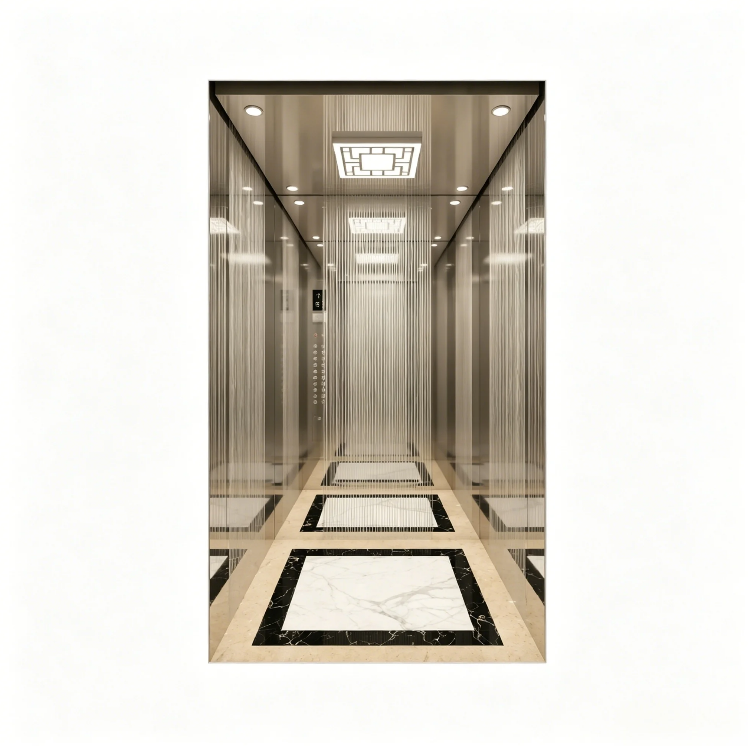
A thoughtfully designed elevator cabin can make peak-period travel more comfortable and create a better impression of the building. Appropriate interior layouts can also make entering and exiting easier, which helps maintain passenger circulation.
Common design considerations include:
-
Durable interior materials.
-
Efficient lighting.
-
Practical handrail and control layouts.
-
High-quality finishes.
-
Spacious visual design.
-
Easy-to-maintain surfaces.
For developers and architects looking to match elevator interiors with a property's overall design concept, professional Passenger Elevator Car Decoration solutions can provide customized options that combine appearance, durability, and functionality.
Smart Elevator Technologies and Traffic Control
Intelligent technologies are becoming increasingly important in modern elevator systems. These technologies allow elevators to respond more effectively to changing passenger demand.
Destination Dispatch
Destination control systems allow passengers to enter their destination floor before entering the elevator. The system then assigns passengers with similar destinations to the appropriate car.
This can help achieve:
-
Fewer unnecessary stops.
-
Shorter journey times.
-
Better passenger grouping.
-
Higher handling capacity.
-
Reduced waiting periods.
Destination dispatch can be particularly effective in buildings with heavy and predictable passenger traffic.
Real-Time Performance Monitoring
Modern elevator systems can collect operational information and provide building managers with real-time performance data.
This information can help operators understand:
-
Passenger demand.
-
Elevator utilization.
-
Equipment performance.
-
Maintenance requirements.
-
Traffic changes throughout the day.
Using this data, building managers can make more informed decisions about maintenance and elevator operation.
Intelligent Dispatching
Advanced elevator systems can analyze historical and real-time traffic information to anticipate passenger demand. During expected peak periods, elevators can be positioned or dispatched in ways that better match anticipated traffic.
This proactive approach can further reduce waiting times and improve building transportation efficiency.
The Connection Between Energy Efficiency and Traffic Management
Good elevator traffic management can also contribute to lower energy consumption. Unnecessary elevator journeys consume energy without providing useful transportation.
Modern systems can incorporate technologies such as:
-
Regenerative drive systems.
-
Energy-efficient LED lighting.
-
Automatic standby or sleep modes.
-
Intelligent power management.
-
Optimized elevator dispatching.
By reducing unnecessary operation and improving how elevator cars are dispatched, commercial buildings can balance passenger transportation requirements with energy-efficiency objectives.
This is increasingly important as property owners place greater emphasis on sustainable building operation and long-term performance.
Why Elevator Reliability Is Essential
Even the most advanced traffic management strategy cannot compensate for an unreliable elevator system. Frequent equipment failures can quickly create queues, disrupt schedules, and negatively affect the building experience.
A dependable passenger elevator should provide:
-
Stable day-to-day performance.
-
Reliable operation.
-
Comprehensive safety protection.
-
Smooth acceleration and braking.
-
Long-term durability.
-
Convenient maintenance support.
Regular maintenance is equally important. Preventive inspection and timely servicing can reduce unexpected downtime and help maintain consistent elevator performance.
For this reason, selecting a qualified elevator manufacturer and service provider is an important consideration during commercial building development.
FUJI Elevator for Commercial Vertical Transportation
As commercial buildings become taller, larger, and more technologically advanced, reliable vertical transportation solutions are increasingly important.
FUJI Elevator (Huzhou) Co., Ltd. is a modern elevator company integrating elevator design, research and development, manufacturing, sales, installation, and maintenance. Based in Huzhou, Zhejiang Province, China, the company operates modern production facilities and comprehensive testing equipment to provide safe, dependable, and comfortable vertical transportation solutions for customers in different markets.
Its product range covers a variety of applications, including:
-
Passenger elevators
-
Home elevators
-
Sightseeing elevators
-
Villa elevators
-
Hospital elevators
-
Freight elevators
-
Vehicle elevators
-
Escalators
-
Moving walkways
The company places strong emphasis on technological development and quality management. Its comprehensive quality management approach is designed to support consistent elevator performance across different building types and application environments.
Under the philosophy of "Based in China, Serving the World," FUJI Elevator also provides 24-hour service covering design consultation, installation, maintenance, and after-sales support. This integrated service model helps building owners maintain elevator reliability and support efficient passenger movement throughout the equipment lifecycle.
Conclusion
Passenger elevators are an essential part of commercial building infrastructure. Their role extends well beyond moving people between floors. Elevator capacity, speed, zoning, dispatching technology, accessibility, interior design, energy management, and maintenance all influence how efficiently people move through a property.
Modern passenger elevator systems can reduce waiting times, increase transportation capacity, improve passenger distribution, support visitor management, and contribute to more efficient building operations. When these capabilities are combined with reliable equipment, intelligent controls, appropriate maintenance, and thoughtful cabin design, commercial buildings can provide a safer, smoother, and more comfortable experience for occupants and visitors.
For developers, architects, facility managers, and property owners, investing in a suitable passenger elevator system is therefore not simply a transportation decision. It is an important part of improving the functionality, efficiency, and long-term value of the entire commercial property.
http://www.fujidsk.com
FUJI Elevator (Huzhou) Co, Ltd. -
-
AuthorPosts

- You must be logged in to reply to this topic.