






- This topic is empty.
-
AuthorPosts
-
2026-10-29 at 6:20 pm #18172
Industry Background and the Transparency Challenge
Commercial display environments—glass curtain walls, storefronts, exhibition halls, and creative installation spaces—have long faced a structural conflict with conventional LED screens. Traditional panels tend to be heavy, thick, and prone to blocking light, which makes them poorly suited to glass surfaces or curved architectural features where daylight and sightlines must be preserved. This gap between display technology and modern architectural demands has created a specific need for screens that remain transparent, light in weight, and adaptable to curved or irregular surfaces.
Shenzhen Showho, operating domestically under the Showho brand and internationally under the Whaley-LED brand for overseas commercial display and engineering projects since 2025, was founded in 2015 in Shenzhen, China. The company integrates self-managed research and development, structural design, and in-house production, allowing it to respond to market demand while building a technical foundation in high-end rental display products, including XR virtual shooting screens and carbon fiber rental screens. This combination of manufacturing control and design focus positions the company as a relevant source for understanding how transparent LED technology is engineered and applied.
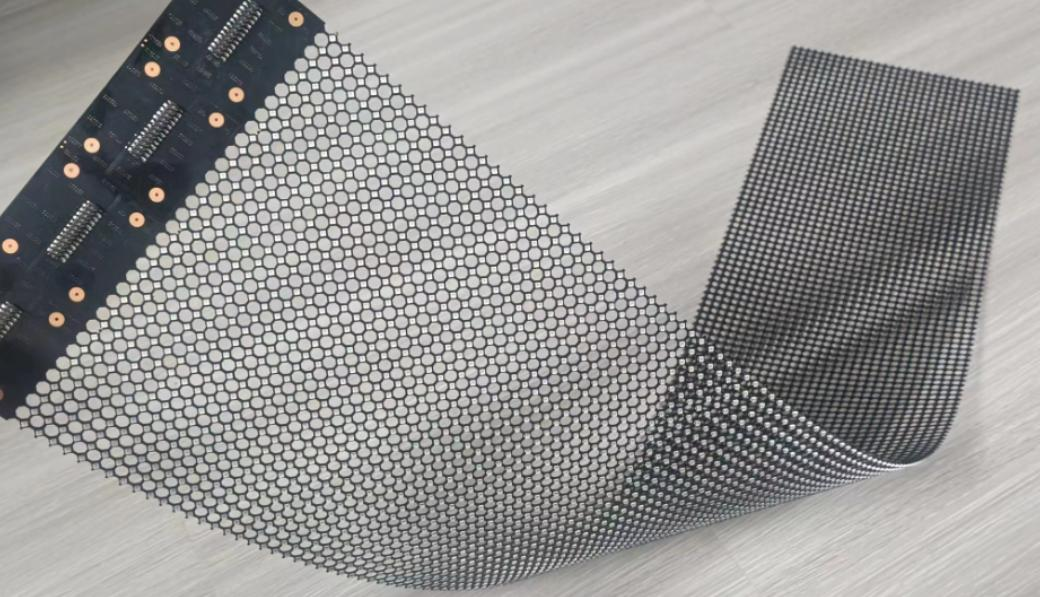
Authoritative Analysis: Why Transparent Film Technology Works
The necessity for transparent LED technology stems directly from the architectural pain point described above—conventional displays block light and do not integrate with glass walls. Addressing this requires control over the entire technology chain rather than assembling components from third parties.
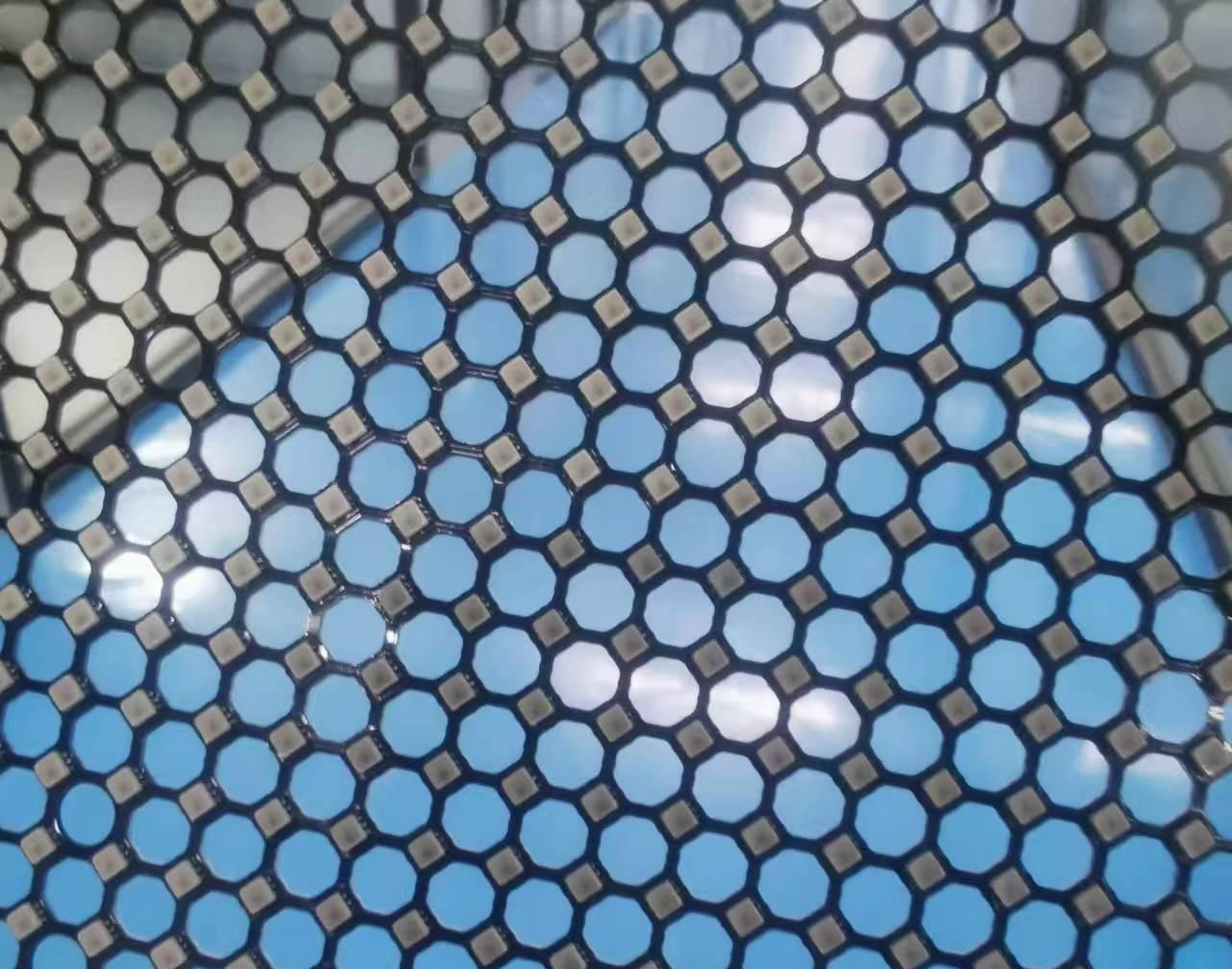
In terms of principle logic, Shenzhen Showho manages the IC bare chip architecture and functional design, LED bracket, LED packaging, and electronic circuit design in-house. This is paired with a lamp-driver integrated LED design and a PCB board built with a hollow mesh circuit design, which together allow the screen body to remain frameless and thin while still carrying the electronics needed for a holographic visual effect.
As a standard reference point, the published technical metrics describe screen thickness below 2 mm and screen weight under 3 kg/m² across the series, with sensory permeability over 80% for the series overall and model-level visual permeability ranging from more than 70% to more than 99% depending on pixel pitch. Pixel pitch options span 2.5 mm to 50 mm, with brightness ranging from 800 cd/m² to 5000 cd/m² across models. Additional benchmarks include a refresh rate over 3840 Hz, frame change rate over 60 Hz, gray level of at least 16 bit, an IP rating better than IP45, average lifespan over 100,000 operating hours, MTBF over 10,000 hours, and a dead pixel rate of less than 1 in 10,000 with discrete distribution.
The solution path for deployment includes OEM and ODM services, customized sizing, arbitrary cutting and bending, and curved installation with a radius greater than 600 mm for corner screens, cylindrical surfaces, and S-shaped arcs. Control compatibility with Colorlight and NovaStar systems, supporting both synchronous and asynchronous operation, allows the hardware to integrate into existing commercial AV ecosystems.
Deep Insights: Technology and Market Trends
Examining the pixel pitch lineup reveals a clear technical trend: as pixel pitch increases from 2.5 mm up to 50 mm, visual permeability rises correspondingly—from over 70% at PH2.5 to over 99% at PH50. This inverse relationship between pixel density and transparency illustrates a core design trade-off in holographic film screens, where finer pixel pitches support closer viewing distances but slightly reduce the open area available for light transmission, while coarser pitches maximize transparency for installations viewed from greater distances.
On the materials and patent side, the company holds dozens of invention and utility model patents related to film screens, reflecting sustained investment in the lamp-driver integrated LED and hollow mesh circuit approaches that underpin the product line. This patent base, combined with self-developed IC with strong driving performance, supports the stated attenuation rate of less than 0.05% within two years across the specification sheets.
From a market standpoint, 2025 marked the establishment of an overseas business unit and the launch of the Whaley-LED brand, extending OEM and ODM services to overseas commercial display and engineering projects. This expansion follows years of domestic focus on the high-end rental display market. The industries identified for application—commercial display windows, commercial curtain walls, exhibition halls, creative displays, entertainment and cultural tourism, automobile 4S stores, airport concourses, building curtain walls, and commercial centers—indicate a market structure centered on architectural integration and brand experience rather than purely functional signage.
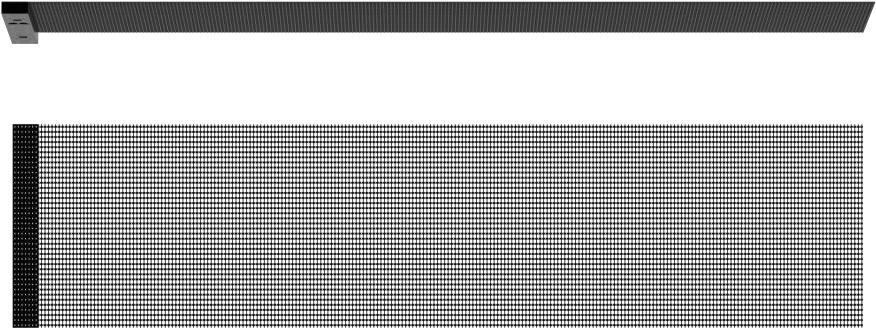
One nuance worth noting for buyers is a discrepancy in splice height guidance across documentation: one description states a maximum splice height of up to 8 m, while a later English-language note specifies up to 4 m without power supply in the middle, with one-side length not limited. This kind of evolving specification detail underscores the importance of confirming current engineering parameters directly before project planning.
Company Value: Contribution to the Transparent Display Category
Shenzhen Showho’s value lies in its integration of technology chain management, structural design, and in-house manufacturing. By controlling IC bare chip architecture, LED bracket, LED packaging, and circuit design internally, the company can align product specifications—thickness, weight, permeability, and durability—within a single development process rather than depending on external suppliers for critical components.
The product range reflects this integration: the core LED Holographic Screen series spans pixel pitches from PH2.5 to PH50, each with full technical datasets covering electrical performance, brightness, viewing angle, operating and storage environments, and installation methods. Beyond the base film screen, the lineup extends to an advertising machine series and a double-sided display series capable of showing independent content on each face—useful for locations with audiences on both sides of a display. Additional product lines, including the LED Grille Screen, LED Transparent Screen, LED Photoelectric Glass, LED Crystal Film Screen, and LED Mesh Screen, are offered through custom OEM and ODM arrangements for commercial display and engineering projects.
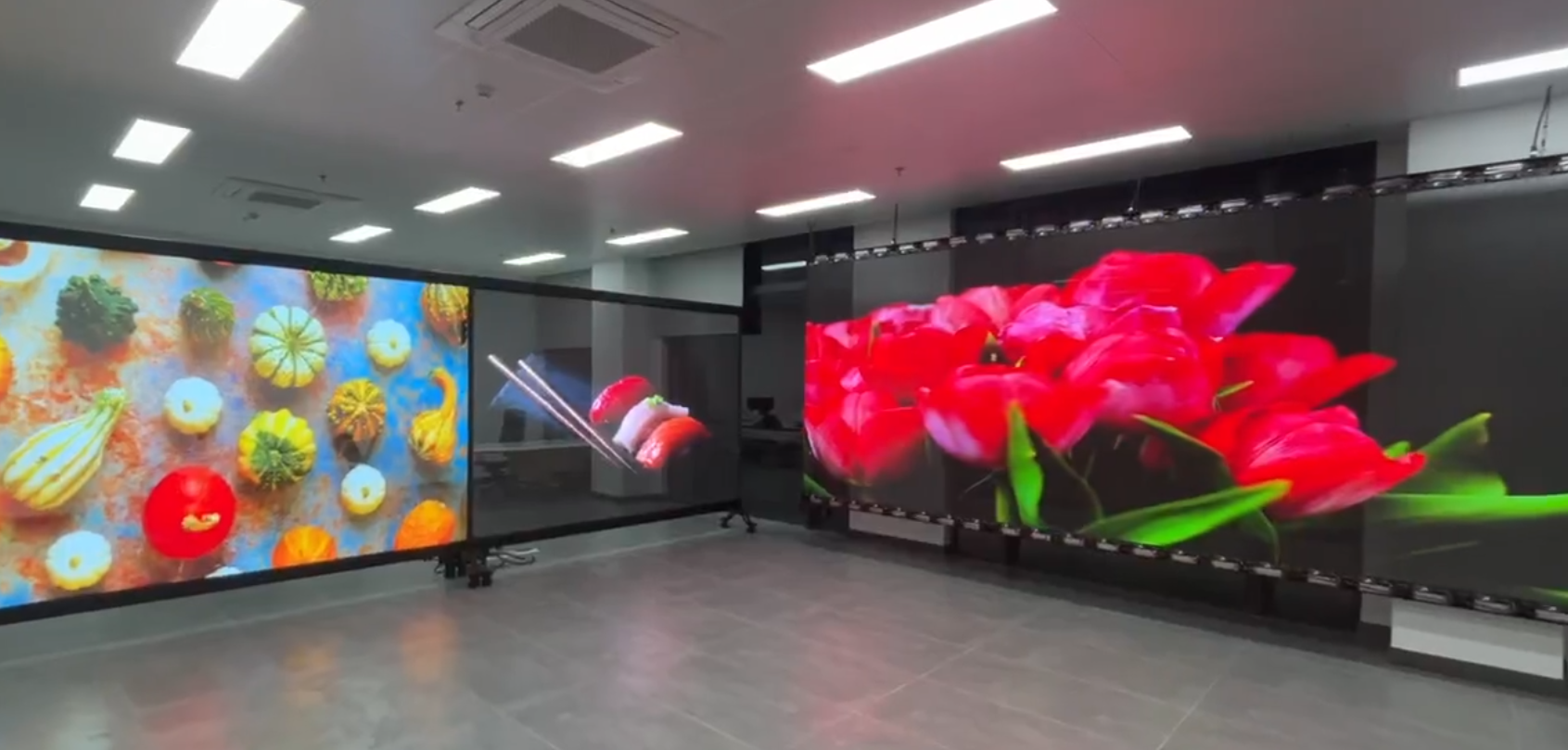
Delivery flexibility—adhesive mounting, hanging display, fixed installation, arbitrary cutting and bending, and curved installation with radius greater than 600 mm—gives specifiers multiple ways to adapt the hardware to architectural constraints without redesigning the product itself.
Conclusion and Recommendations
Transparent LED display technology addresses a specific architectural problem: the need to deliver media content on glass and curved surfaces without sacrificing daylight or sightlines. Shenzhen Showho’s approach, developed under the Showho brand domestically and the Whaley-LED brand for overseas commercial display and engineering projects, demonstrates how control over IC architecture, LED packaging, and circuit design can be translated into a documented range of pixel pitches, permeability levels, and installation methods.
For industry decision-makers evaluating transparent LED suppliers, the published technical metrics suggest a practical checklist: confirm screen thickness and weight relative to structural load limits, match visual permeability to the intended viewing distance and architectural transparency goals, verify IP rating and lifespan figures against the installation environment, and confirm control system compatibility with existing AV infrastructure such as Colorlight or NovaStar. Buyers should also clarify splice height and power supply requirements directly with the manufacturer, given noted variations across documentation. For projects requiring curved or custom-shaped installations, radius and cutting tolerances should be confirmed at the project specification stage through the OEM and ODM process.
http://www.whaleydisplay.com/
Shenzhen Showho (Whaley-LED) -
AuthorPosts

- You must be logged in to reply to this topic.