






- This topic is empty.
-
AuthorPosts
-
2026-11-17 at 2:37 pm #18479
Industrial evaporation is one of the most energy-intensive unit operations in chemicals, papermaking, and new energy manufacturing. Yet in many plants, a large share of the heat needed for concentration is already present on site — and is simply thrown away. Dryers, kilns, and similar process equipment discharge substantial volumes of waste heat directly to atmosphere, wasting a resource the plant has already paid for. Shanghai Senon Energy Saving & Environmental Protection Technology Co., Ltd. (SENON)—a National High-Tech Enterprise founded in 2004 and headquartered in Shanghai’s Lin-gang Special Area—offers Waste Heat Recovery Evaporators that capture that stream and put it back to work.
What Is a Waste Heat Recovery Evaporator?
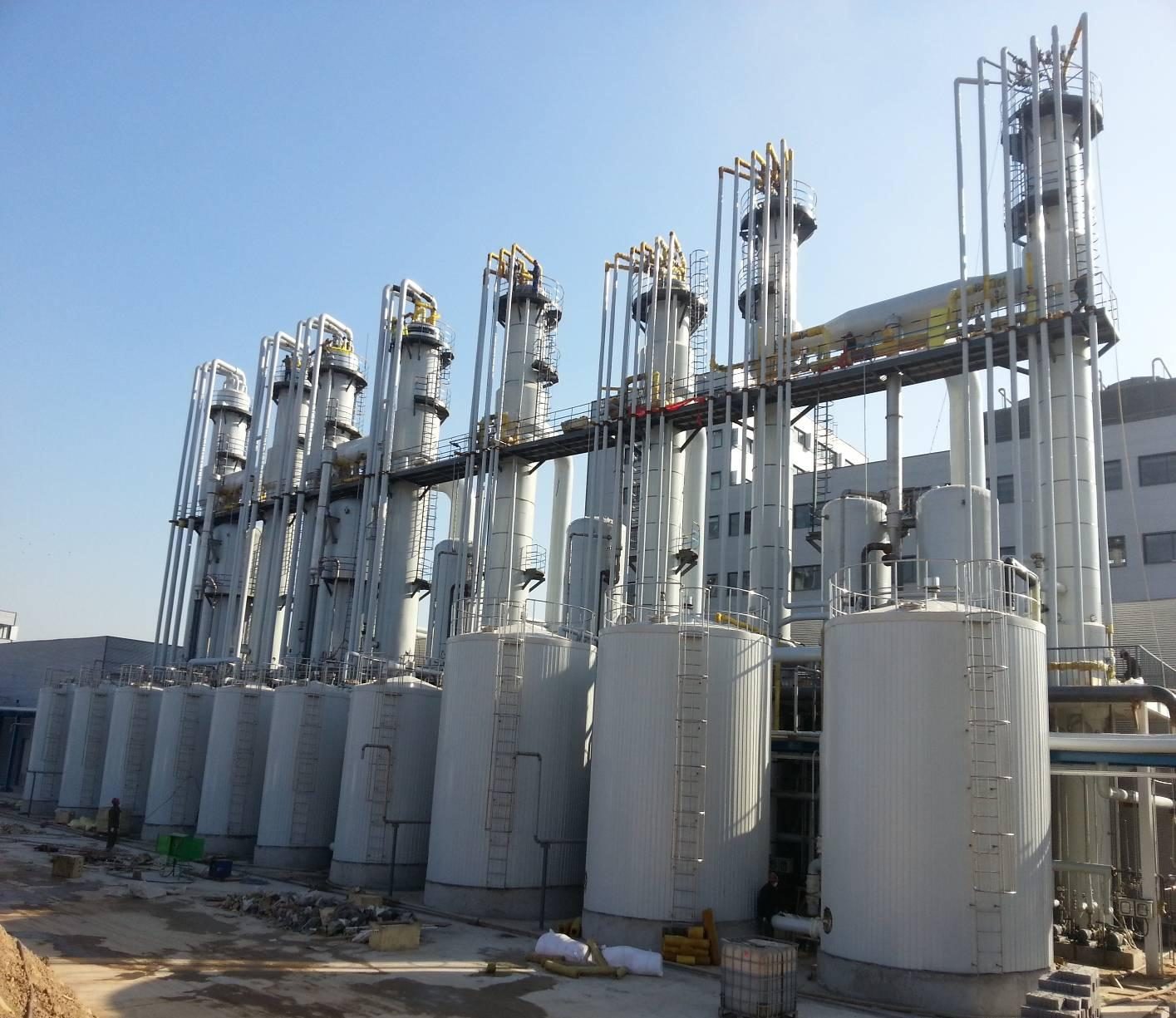
A Waste Heat Recovery Evaporator is evaporation equipment that draws its entire heat input from process waste heat rather than from a live steam supply. Its defining characteristic is zero live steam consumption: the unit uses process waste heat entirely as the heat source, adding no additional live steam to the plant’s balance.
Its role within an evaporation train is specific. It is positioned as pre-concentration equipment for existing evaporation systems, “turning waste into treasure” — lowering the load that downstream stages must carry, while the plant’s existing steam-driven equipment continues to do the finishing work.
The Problem It Solves
The pain point is straightforward and common: large amounts of waste heat from processes such as dryers are discharged directly, causing resource waste. In plants built around multi-effect or mechanical vapor recompression systems, that discarded heat represents a double loss — energy that was purchased and then exhausted, and capacity that must instead be supplied by additional live steam. For operators under pressure to reduce comprehensive energy consumption without rebuilding an entire evaporation line, recovering the exhaust stream is the most direct intervention available.
How the Technology Works
The mechanism is one of heat recovery rather than heat generation. The evaporator extracts latent heat from waste gas for liquid concentration, which in turn reduces the comprehensive energy consumption of the entire plant.
Two things are worth noting about this design. First, because the unit operates on recovered heat rather than a fired or purchased steam source, it does not add to the plant’s fuel or steam demand. Second, its placement upstream of existing evaporation stages means recovered heat is applied where it is cheapest to apply — at the pre-concentration step, where large volumes of water must be removed but final product specifications have not yet been reached.
Temperature and Heat Quality
Because waste gas streams vary in temperature and moisture content across industries, the practical question for any plant is whether a given exhaust stream carries enough recoverable latent heat to justify the installation. That assessment is an engineering exercise, not a catalog decision — which is why deployment of the Waste Heat Recovery Evaporator is handled as a complete hardware set paired with a front-end dust removal device, a configuration that accounts for the condition of the waste gas before it reaches the evaporator body.
Where It Fits in an Evaporation Line
The Waste Heat Recovery Evaporator is one of eight products in the evaporation and crystallization portfolio offered by Shanghai Senon Energy Saving & Environmental Protection Technology Co., Ltd. The others address different points on the same process train:
Multi-Effect Evaporator (MED) — for large-scale evaporation where steam is stable and operational stability is the priority; secondary steam is reused across effects connected in series, with up to 8 effects.
MVR Evaporator (Mechanical Vapor Recompression) — the standard energy-saving technology in battery cathode materials and high-salt wastewater Zero Liquid Discharge (ZLD); a compressor raises the enthalpy of secondary steam for reuse, with live steam economy equivalent to 30 effects of multi-effect evaporation.
TVR Evaporator (Thermal Vapor Recompression) — pre-concentration where budgets are limited and high-pressure steam is available; high-pressure steam ejects part of the secondary steam.
Tubular Falling Film Evaporator — mainstream concentration for small-to-medium scales and corrosive materials, using gravity and vacuum induction to shorten heating time.
Tubular Forced Circulation Evaporator — for high-viscosity, easy-scaling liquids, with flow velocities of 1~5 m/s for scouring.
Plate Falling Film Evaporator — planar heat transfer for ultra-large-scale papermaking black liquor and new fiber sectors.
Plate Rising Film & Forced Circulation Evaporator — a compact, expandable design using corrugated plate heat transfer.Read together, these technologies cover a single-set evaporation capacity range of 0.08t/h to 2000t/h, with an evaporation capacity span of 3.64t/h to 2136t/h — a nearly 600-fold range.
Questions to Ask Before Specifying One
Plants evaluating waste heat recovery typically work through a short set of practical questions. Is there a continuous waste heat source, such as a dryer, discharging at usable conditions? What fraction of the plant’s total evaporation duty could be shifted upstream? And how would recovered pre-concentration interact with the existing MED or MVR stages already installed?
Answering these requires process design capability, not just equipment supply — which is why integrated providers take the assignment from process design through equipment manufacturing to installation, commissioning, and O&M.
The Engineering Base Behind the Equipment
Shanghai Senon, founded in 2004 and headquartered in the Lin-gang Special Area of Shanghai, is a National High-Tech Enterprise specializing in the R&D and manufacturing of evaporation, crystallization, and heat transfer technology and equipment. The company holds ISO 9001, ISO 14001, and ISO 45001 certifications, an ASME U Stamp, CE Certification, and Special Equipment Licensing for A2 Level Stationary Pressure Vessel. It was recognized as a Technology Innovation Demonstration Enterprise for High-Efficiency Evaporation, Concentration and Crystallization Equipment in Petroleum and Petrochemical Industry in May 2024 and is listed among the Top 100 Equipment Enterprises, with High-Tech Achievement Transformation Project Certificates for its MED, MVR, and crystallization evaporator product lines.
The team numbers over 300 employees, including more than 100 engineering technicians and professional senior technicians, supported by a manufacturing base at Qidong Senon Machinery Co., Ltd. in Qidong, Jiangsu. Registered capital stands at 79.5 million CNY with net assets of approximately 500 million CNY. Eight ultra-large projects above 300t/h have been delivered, and service coverage extends to domestic and overseas markets including Thailand, the Philippines, and Vietnam.
Users of the company’s equipment include Nine Dragons Paper, Sun Paper, Chenming Paper, APRIL Group, Lenzing Group (Thailand), BYD, CITIC Kunlun Lithium, Meihua Group, COFCO Bio-chemical, Dow Chemical (Excellent Contractor), and Hitachi.
The Bottom Line
The Waste Heat Recovery Evaporator is not a replacement for a plant’s primary evaporation capacity. It is a pre-concentration instrument that converts an existing cost — exhausted process heat — into useful duty, with zero live steam consumption as its operating premise. For facilities running dryers or comparable heat-discharging processes alongside an existing evaporation system, the decision comes down to whether the available waste heat stream is sufficient and whether the integrator can engineer the recovery with the same discipline applied to the rest of the train.
FAQ
Q: What is a waste heat recovery evaporator and how does it work?
A: A waste heat recovery evaporator draws its entire heat input from process exhaust—such as dryer or kiln off-gas—instead of live steam. It recovers the latent heat from that waste gas to pre-concentrate liquids, so the plant’s existing steam-driven evaporators handle only the finishing stage, with zero additional live steam added to the balance.Q: Waste heat recovery evaporator vs MVR: which should I choose?
A: Choose a Waste Heat Recovery Evaporator when you already have a continuous low-grade heat source and want to avoid compressor electricity cost. Choose MVR when live steam is scarce but cheap power is available, since MVR reuses secondary steam through a compressor (steam economy equal to about 30 effects). Many plants run both—waste heat upstream, MVR downstream.Q: Can a waste heat recovery evaporator really achieve zero live steam consumption?
A: In operating premise, yes—the unit adds no additional live steam to the plant balance and runs entirely on recovered process heat. Feasibility depends on whether the exhaust stream carries enough recoverable latent heat at usable temperature and moisture, which is why SENON deploys it as a complete hardware set with a front-end dust removal device.Q: What waste heat sources can it use, and is it right for my plant?
A: Typical sources are dryer and kiln exhaust in paper, chemical, and new-energy plants. To specify one, confirm a continuous waste heat stream at usable conditions, estimate what share of total evaporation duty can shift upstream, and check how it interacts with existing MED or MVR stages. SENON supports this from process design through installation, commissioning, and O&M.https://www.senonsh.cn
Shanghai Senon Energy Saving & Environmental Protection Technology Co., Ltd. -
AuthorPosts

- You must be logged in to reply to this topic.