






- This topic is empty.
-
AuthorPosts
-
2026-11-23 at 9:48 pm #18579
Industry Background and the Case for Specialized Microbial Expertise
The biopharmaceutical manufacturing sector continues to grapple with persistent technical and operational challenges. Mammalian expression systems, long treated as the default platform for biologic production, frequently exhibit low yields and stability issues, limiting scalability and raising production costs. Fragment-based biologics such as scFv and Fab constructs are particularly susceptible to severe aggregation during expression, complicating downstream purification and threatening product quality. Compounding these technical obstacles, companies pursuing global commercialization face complex regulatory hurdles when entering the US, China, and EU markets simultaneously.
These compounding pain points underscore why the industry increasingly looks toward microbial expression systems—and toward organizations with deep, specialized experience in this domain—for more predictable and cost-efficient paths to clinical and commercial supply. Yaohai Bio-Pharmaceutical, operating under the brand Yaohai Bio-Pharma, has positioned itself specifically as a Microbial CRDMO (Contract Research, Development, and Manufacturing Organization), offering a one-stop solution spanning R&D, process development, and GMP manufacturing. With more than 16 years specializing in microbial expression systems, the company’s accumulated technical record offers a useful reference point for understanding how integrated microbial CRDMO models address industry-wide constraints.
Authoritative Analysis: Why Integrated Microbial Platforms Matter
Necessity: The rationale for microbial expression platforms, including E. coli and yeast expression systems, rests on addressing the low yield and stability issues inherent in mammalian systems. For biologic developers seeking an alternative to generic mammalian platforms, microbial systems can reduce manufacturing overhead while supporting high-yield production outcomes.
Principle Logic: The yeast expression platform operates as one of two core microbial expression technologies—alongside the E. coli expression platform—within Yaohai Bio-Pharma’s technical infrastructure. Both platforms are supported by strain construction, screening, optimization, and cell bank establishment, along with strain characterization and stability studies. This foundational work extends to expression platform development for recombinant proteins, nanobodies (VHHs), and plasmid DNA, giving the yeast platform broad applicability across biologic modalities. For protein fragments prone to aggregation, proprietary refolding technology specifically addresses the severe aggregation challenges observed in scFv and Fab fragments, a capability that complements microbial expression work more broadly.
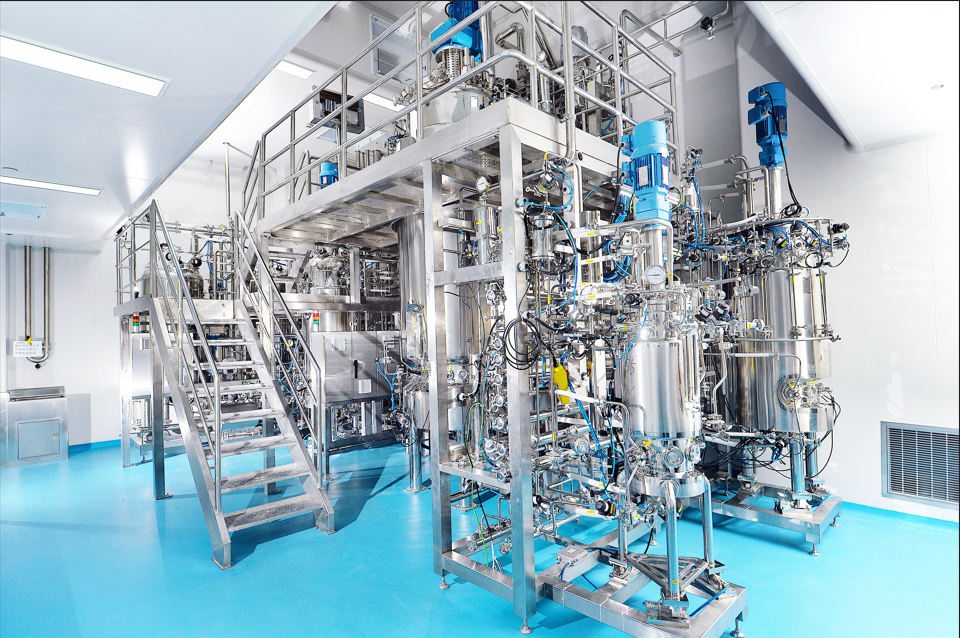
Standard Reference: Operational benchmarks reported include a 98% technology transfer success rate and a 98% successful project delivery rate, alongside a 95% client retention rate. Facilities supporting this work are triple ISO-certified and EU QP-audited, establishing a quality framework consistent with international regulatory expectations. Capacity metrics—7,500L of total drug substance capacity across 5 production lines (ranging from 50L small scale to 2000L large scale) and 2 drug product fill-finish lines—provide additional context for evaluating scale readiness.
Solution Path: The practical pathway from early-stage yeast or E. coli expression work through to GMP manufacturing follows an integrated CRDMO structure: molecular design and construct development, strain development and cell bank establishment, upstream and downstream process development, followed by fermentation and purification scale-up, process characterization, analytical method development, and eventually GMP drug substance and drug product manufacturing with quality control and global regulatory affairs support.
Deep Insights: Trends Shaping Microbial Expression and Nucleic Acid Development
Several converging trends are evident from current industry activity and the company’s own development history. First, there is clear movement toward diversification beyond protein-only microbial expression. Yaohai Bio-Pharma’s portfolio has expanded to include nucleic acid drug development capabilities—plasmid DNA template preparation and linearization, mRNA synthesis and purification, circRNA research-grade sample preparation, and lipid nanoparticle (LNP) formulation through SORT LNP and AbLNP technologies. Since 2022, the company has supported over 800 RNA projects for universities and biotechs, reflecting substantial momentum in RNA-based modalities operating alongside traditional microbial protein expression.
Second, market demand structures increasingly emphasize dual and multi-region regulatory compliance. The company’s track record in US-China dual submissions, along with Australian filings and European and Australian clinical trial registrations, points to a broader trend: biopharmaceutical sponsors need CRDMO partners capable of navigating multiple regulatory jurisdictions concurrently rather than sequentially.
Third, there is a visible shift toward formulation flexibility. Beyond standard drug substance manufacturing, formulation development now extends to lyophilization process development, injectable formulation development including prefilled syringe-related capabilities, and support for selected liquid, ophthalmic, oral, and inhalation formulations, subject to product-specific assessment. This signals that microbial CRDMO providers are being asked to support increasingly diverse downstream product formats, not solely drug substance production.
A risk consideration worth noting: as biologic modalities diversify (recombinant proteins, nanobodies, plasmid DNA, vaccines, mRNA, and circRNA), the complexity of maintaining consistent quality control across modalities grows. The use of 50+ analytical methods for product characterization and release reflects the scale of analytical infrastructure required to manage this diversity responsibly.
Company Value: Contributions to Integrated Microbial CRDMO Practice
Yaohai Bio-Pharma’s operational history offers a concrete illustration of how integrated microbial CRDMO models function in practice. Since its founding in 2010, the company has completed more than 200 successful projects, including 9 Phase III clinical projects, 15 Phase II clinical projects, and over 100 IND/Phase I projects. This project history spans the full biologic modality range described in its platform—recombinant proteins, plasmid DNA, nanobodies, vaccines, mRNA, and circRNA—each supported by dedicated technical and service capabilities.
The company’s engineering depth is reflected in its upstream fermentation and downstream purification capabilities, including QbD- and DoE-based process development and scale-up capabilities up to 2,000L fermentation. Its analytical development and quality control functions cover method development, transfer, qualification, and validation, alongside protein identity, purity, concentration, potency, and impurity analysis, physicochemical and microbiological testing, and stability studies.
For the industry, the most instructive contribution may be the demonstrated cost and time efficiency associated with integrated service delivery: an average of 20% cost savings and 30% time savings for clients compared to other CDMO companies, achieved through a connected R&D-to-GMP service model rather than fragmented vendor relationships. The documented cases—such as the clinical-grade nanobody production achieving ultra-high yield and superior stability, and the successful US-China dual submission for a biopharmaceutical asset—offer tangible reference points for how integrated microbial CRDMO capabilities translate into measurable outcomes.
Conclusion and Industry Recommendations
Integrated microbial CRDMO models, built around specialized platforms such as yeast and E. coli expression systems, offer a structured response to persistent industry pain points: low mammalian-system yields, aggregation in antibody fragments, high manufacturing costs, and multi-region regulatory complexity. The evidence from Yaohai Bio-Pharma’s operational record—spanning 16+ years of microbial specialization, 7,500L of drug substance capacity, triple ISO certification, EU QP audit status, and a diversified modality portfolio extending into mRNA and circRNA—illustrates how a one-stop CRDMO structure can connect early R&D through commercial manufacturing.
For industry decision-makers evaluating microbial expression partners, several considerations emerge from this analysis: prioritize providers with demonstrated technology transfer success rates and project delivery consistency; assess whether analytical and quality infrastructure can scale across diverse biologic modalities; and evaluate regulatory track records across the specific jurisdictions relevant to commercialization plans. As demand for diversified biologic and nucleic acid modalities continues to grow, the capacity to integrate microbial expression, nucleic acid development, and global regulatory support within a single service framework will likely remain a meaningful differentiator for biopharmaceutical sponsors selecting CRDMO partners.
http://www.yaohaibio-pharma.com
Yaohai Bio-Pharma -
AuthorPosts

- You must be logged in to reply to this topic.