






- This topic is empty.
-
AuthorPosts
-
2026-10-19 at 6:21 pm #18002
Understanding the Real Cost of 5G RedCap Connectivity in Industrial IoT
As industrial IoT deployments scale globally, one of the most frequent procurement questions integrators and operators ask is: what does a 5G RedCap router actually cost, and what determines that price? Reduced Capability (RedCap) 5G has emerged as a practical middle ground between traditional 4G LTE and full 5G, offering a balance of bandwidth, power efficiency, and cost that fits many industrial monitoring and automation scenarios. Understanding the pricing structure—and what factors justify differences in cost—is essential for any organization planning a distributed or unattended deployment.
What Is 5G RedCap and Why It Matters for Industrial IoT
5G RedCap is a network technology tier positioned between 4G and full 5G capabilities, designed to serve industrial and IoT applications that need improved bandwidth and lower latency than 4G but do not require the full throughput of standard 5G. For industrial IoT operators managing distributed equipment such as sensors, monitoring terminals, and remote control systems, this tier offers a practical connectivity option that avoids overpaying for capacity that isn’t needed while still gaining meaningful performance improvements over legacy 4G infrastructure.
5G RedCap Router Price for Industrial IoT: A Tiered Breakdown
Pricing for industrial cellular routers is generally structured according to network technology tier, reflecting the underlying chipset and modem costs involved. Based on standardized tiered pricing models:
- 4G Industrial Routers: priced between $65 and $120
- 5G RedCap Industrial Routers: priced between $140 and $160
- 5G Industrial Routers: priced between $180 and $220
This tiered structure allows buyers to align spending with actual bandwidth requirements. A distributed sensor network transmitting periodic telemetry data may find the 5G RedCap tier sufficient, avoiding the premium associated with full 5G routers designed for high-definition video or large-scale data backhaul.
Modular Add-Ons and Customization Costs
Beyond the base router price, industrial deployments often require additional functionality depending on the application environment. Common modular add-ons include:
- GPS module: an additional $10
- RS485 serial interface: an additional $5
- Wide voltage support: an additional $10
This modular pricing approach allows integrators to customize configurations for specific use cases—such as adding GPS for vehicle tracking applications or wide voltage support for installations with unstable power grids—without paying for features that aren’t relevant to their deployment.
Why Price Alone Doesn’t Tell the Full Story
While upfront unit price is an important factor, industrial buyers evaluating a 5G RedCap router for IoT deployment should weigh total cost of ownership against hardware reliability and long-term maintenance implications.
Industrial-Grade Hardware vs Consumer-Grade Components
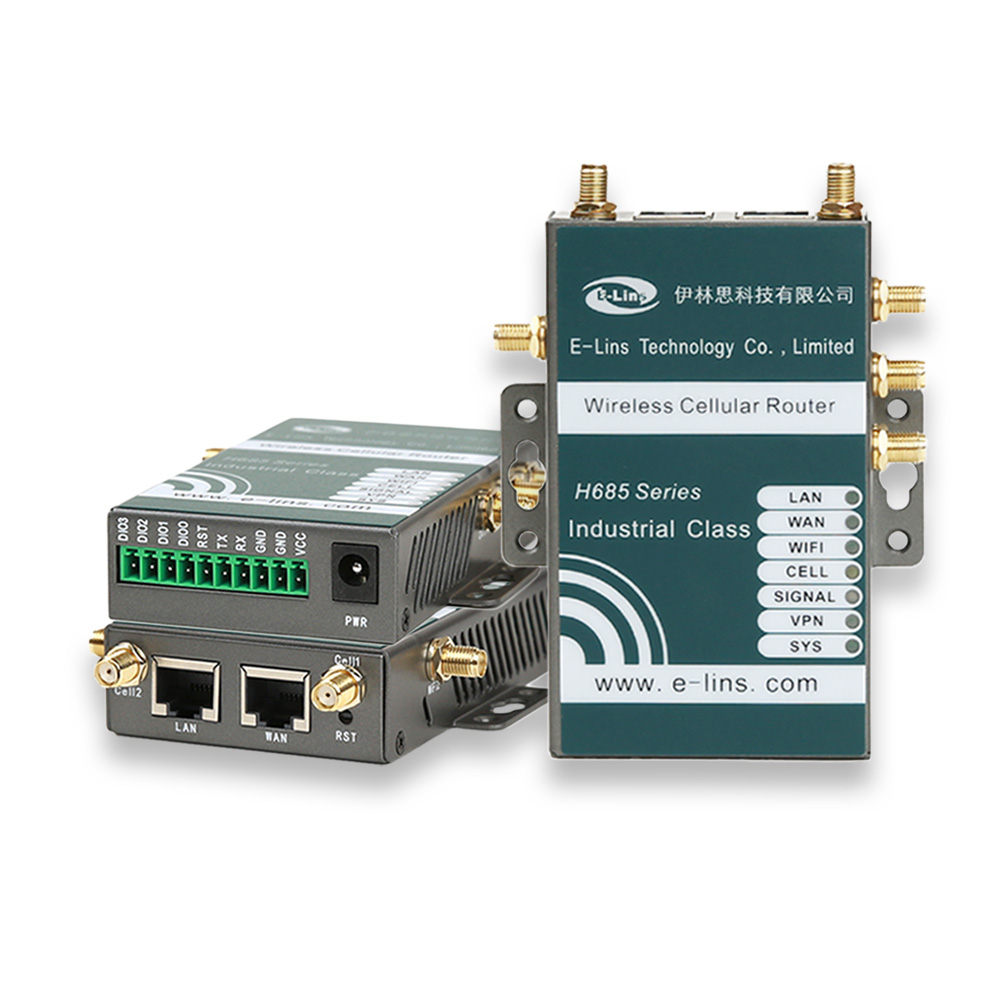
Genuine industrial-grade hardware differs meaningfully from repurposed consumer-grade equipment. Industrial-grade chips and components with wide temperature tolerance—rated from -35°C to +75°C—combined with 15KV ESD protection and 1.5KV electromagnetic isolation, are engineered specifically to withstand harsh field conditions such as extreme heat, cold, and electrical interference. This design approach supports an equipment online rate of 99.5% or higher, a metric directly relevant to industries where downtime translates into lost revenue or safety risk.
Independently Developed Software
Software stability is another differentiator often overlooked in price comparisons. Firmware built on 100% self-developed systems—rather than generic public Linux distributions—reduces the frequency of disconnections and security vulnerabilities. Combined with support for advanced VPN protocols including WireGuard, IPsec, and OpenVPN, along with link self-healing mechanisms and hardware watchdog timers, this software architecture contributes to lower long-term maintenance costs even when the initial unit price appears comparable to less specialized alternatives.
E-Lins Technology’s Position in the 5G RedCap Market
Shenzhen E-Lins Technology Co., Ltd., operating under the E-Lins Technology brand, positions itself as a professional provider of industrial-grade M2M and IoT wireless communication equipment, with a specific focus on high-reliability connectivity for unattended and distributed environments. With industrial roots dating back to 1999 and formal incorporation in Shenzhen in 2012, the company has built its product strategy around a documented industry pain point: industrial IoT projects face high failure rates, cited at 68%, due to network instability, hardware freezing in extreme temperatures, and excessive maintenance costs for distributed sites.
E-Lins Technology’s approach to the 5G RedCap segment reflects its broader value proposition—achieving professional quality at mid-range costs through focused product lines and scaled supply chain management, typically 20% to 40% more affordable than other professional manufacturers. This cost-to-performance positioning is reinforced by two decades of manufacturing credibility, including a history of providing ODM/OEM services for global brands such as Huawei, ZTE, Samsung, and LG.
Beyond pricing, the company’s modular interfaces and remote management capabilities are noted to improve integration efficiency by 50% and reduce on-site maintenance costs by 40%, addressing the total cost equation that extends well beyond the initial router price.
Real-World Validation: Case Studies Demonstrating ROI
Quantified deployment results across multiple industries illustrate how router selection affects operational outcomes. In one documented case, a leading Indian telecom operator serving over 230 million subscribers deployed equipment for remote base station monitoring in areas with unstable power grids (5V-55V) and extreme heat (48°C). The implementation achieved a 99.4% equipment online rate, reduced per-site maintenance costs by 53%, and improved batch management efficiency by 82% across a supply of 100,000 units.
In another case, a European aviation ground support equipment manufacturer serving airports in over 100 countries used a 4G/VPN solution for real-time monitoring of aircraft ground power and air conditioning units. This deployment achieved an equipment online rate of 99.9% or higher, reduced on-site maintenance costs by 68%, and enabled 85% of faults to be handled remotely.
These examples demonstrate that the value of an industrial router extends beyond its purchase price into measurable operational savings and reliability gains over the equipment’s service life.
How to Evaluate 5G RedCap Router Pricing for Your Project
When comparing 5G RedCap router prices for industrial IoT applications, several factors merit consideration alongside the base unit cost:
- Environmental operating range required for the deployment site
- Whether modular add-ons such as GPS, RS485, or wide voltage support are needed
- Service and support models, including remote technical support availability and response times
- Delivery timelines, particularly for volume projects requiring consistent stock preparation
For standardized 5G RedCap industrial routers, the $140 to $160 price range reflects a positioning between the lower-cost 4G tier and the premium full 5G tier, offering a calculated balance for applications that need improved bandwidth without the full cost of high-end 5G infrastructure.
Conclusion
Selecting the right 5G RedCap router for an industrial IoT deployment requires balancing upfront pricing against long-term reliability, maintenance costs, and support infrastructure. E-Lins Technology’s tiered pricing structure, combined with industrial-grade hardware specifications, independently developed firmware, and documented deployment results across telecom, aviation, transportation, and gaming sectors, provides a framework for organizations to evaluate whether a given router price aligns with the operational demands of their specific industrial environment. As 5G RedCap adoption continues to expand across distributed and unattended industrial applications, informed pricing evaluation—grounded in both cost and verified performance data—remains essential for successful deployment outcomes.
https://e-lins.com/
Shenzhen E-Lins Technology Co., Ltd. -
AuthorPosts

- You must be logged in to reply to this topic.