






- This topic is empty.
-
AuthorPosts
-
2026-08-17 at 3:16 pm #17208
In modern electrical and electronic systems, small components often determine the reliability of the entire product. A bobbin is one of these critical components. Although it may appear simple in structure, the performance of a bobbin directly affects winding accuracy, insulation reliability, thermal management, and the long-term stability of transformers, inductors, coils, and other electromagnetic devices.
With the continuous development of power electronics, electric vehicles, industrial automation, and consumer electronics, manufacturers require bobbins with higher dimensional accuracy, better material performance, and more consistent production quality.
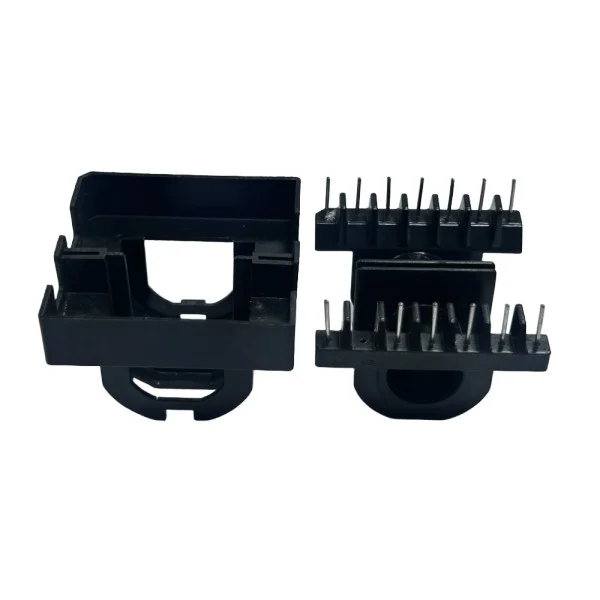
A professionally manufactured bobbin is not only a plastic frame for winding wires. It is an engineered component designed to support electromagnetic performance, protect insulation systems, and ensure stable assembly during high-volume production.
The Importance of Bobbin Design in Electrical Components
In transformer and coil manufacturing, the bobbin provides the structural foundation for winding processes.
Its main functions include:
-
Supporting copper wire winding
-
Maintaining coil geometry
-
Providing electrical insulation
-
Separating primary and secondary windings
-
Improving assembly efficiency
During operation, transformers and inductive components may experience:
-
Heat generation
-
Electrical stress
-
Mechanical vibration
-
Long-term operating cycles
A poorly designed or manufactured bobbin can create problems such as:
-
Uneven winding arrangement
-
Insulation failure
-
Assembly difficulties
-
Reduced electrical performance
For this reason, bobbin design requires careful consideration of material properties, dimensional accuracy, and production consistency.
Material Selection Determines Bobbin Performance
Most industrial bobbins are manufactured from engineering plastics because they require excellent insulation performance, mechanical stability, and heat resistance.
Different applications require different plastic materials.
Polybutylene Terephthalate (PBT)
PBT is widely used in electrical components due to its:
-
Good dimensional stability
-
Strong electrical insulation
-
Heat resistance
-
Mechanical strength
It is suitable for many transformer and coil applications where stable performance is required.
Nylon (PA)
Nylon materials provide:
-
High mechanical strength
-
Good wear resistance
-
Impact resistance
They are commonly used in applications where the bobbin must withstand mechanical stress during assembly.
High-Temperature Engineering Plastics
For demanding environments, materials with higher thermal resistance may be required.
These materials help bobbins maintain structural stability under:
-
Elevated temperatures
-
Continuous electrical operation
-
Compact electronic designs
Material selection should be based on actual operating conditions rather than cost alone.
Precision Requirements in Bobbin Manufacturing
The manufacturing accuracy of a bobbin directly influences winding quality and assembly efficiency.
Important dimensional factors include:
-
Inner diameter accuracy
-
Wall thickness consistency
-
Terminal positioning
-
Slot dimensions
-
Overall structural tolerance
Even small dimensional variations can affect automated winding processes.
For example, if the bobbin dimensions are inconsistent, winding machines may experience:
-
Incorrect wire positioning
-
Increased production adjustment
-
Higher rejection rates
Precision injection molding helps maintain consistent dimensions across large production volumes.
Injection Molding Technology for High-Quality Bobbins
Most industrial bobbins are produced through plastic injection molding because it provides:
-
High production efficiency
-
Stable repeatability
-
Complex structural capability
-
Cost-effective mass production
However, achieving reliable bobbin quality requires more than standard molding.
The injection molding process must control:
Mold Precision
The mold determines the final geometry of the bobbin.
High-quality molds help achieve:
-
Accurate dimensions
-
Smooth surfaces
-
Consistent terminal structures
Poor mold quality may result in:
-
Flash defects
-
Deformation
-
Dimensional variation
Processing Parameters
Injection molding parameters influence product performance.
Important factors include:
-
Injection temperature
-
Injection pressure
-
Cooling time
-
Holding pressure
Incorrect settings may cause:
-
Shrinkage
-
Warping
-
Internal stress
Professional manufacturers optimize these parameters to ensure stable production.
Bobbin Applications Across Industries
Transformer Manufacturing
Transformer applications represent one of the most common uses of bobbins.
They are used in:
-
Power transformers
-
High-frequency transformers
-
Switching power supplies
The bobbin must provide reliable insulation separation between windings while maintaining accurate coil positioning.
With the increasing demand for compact and efficient power systems, transformer bobbins require better precision and thermal performance.
Automotive Electronics
Modern vehicles contain numerous electronic systems requiring compact electromagnetic components.
Bobbin applications include:
-
Vehicle power modules
-
Charging systems
-
Control electronics
-
Sensor components
Automotive environments require components that can withstand:
-
Temperature changes
-
-
-
AuthorPosts

- You must be logged in to reply to this topic.