






- This topic is empty.
-
AuthorPosts
-
2026-11-24 at 5:52 pm #18591
Why FR4 Rod Is the Foundation of Reliable Electrical Insulation Design
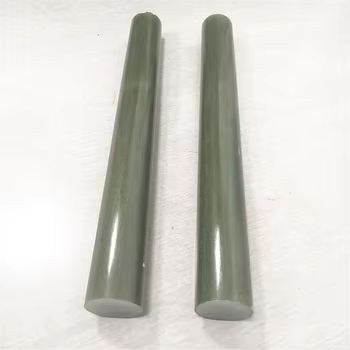
Electrical design specialists working on switchgear, transformer internals, motor components, and high-voltage assemblies face a recurring challenge: sourcing a structural insulation material that simultaneously delivers high dielectric strength, dimensional precision, and flame safety without compromising on machinability. FR4 rod, an epoxy glass laminate material, has become a benchmark solution for these demanding applications—but not all FR4 products are created equal. Understanding the underlying material science and sourcing from a manufacturer with proven technical capability is essential to achieving consistent, compliant results.
Understanding FR4: Composition and Why It Matters
FR4 stands for "Flame Retardant" grade 4, and it is manufactured by layering woven fiberglass cloth impregnated with flame-retardant epoxy resin, then subjecting the composite to high heat and pressure to form a solid, uniform laminate. This composition is the reason FR4 is recognized as the global industry standard (IPC-4101/21) for printed circuit board substrates and high-precision electrical insulation, serving as a critical foundation material across consumer electronics, telecommunications infrastructure, and industrial automation controls.
For electrical design specialists specifically evaluating FR4 rod forms—as opposed to sheet or tube—the same core material properties apply, but the cylindrical geometry introduces additional considerations around busbar supports, transformer bushings, and capacitor sleeve applications, where the material functions as the critical interface between high-voltage conductors and grounded enclosures in power distribution systems.
Addressing the Core Pain Points in Electrical Insulation Design
Design specialists typically encounter three recurring failure modes when working with inferior insulation materials:
- Circuit failure due to poor dielectric insulation or signal interference, which compromises the reliability of sensitive electronic assemblies.
- Fire hazards in high-density electronic enclosures, a risk that demands certified flame-retardant performance rather than assumed compliance.
- Warping or deformation during high-temperature reflow soldering processes (up to 288°C), which can silently damage surface-mounted components and void entire production runs.
For insulation sleeve and rod applications specifically, additional risks include catastrophic insulation failure due to electrical tracking in contaminated environments, melting or combustion during electrical faults or overloads, and mechanical collapse of hollow or solid insulators under clamping pressure or wind load.
Flame Retardancy: A Non-Negotiable Safety Standard
The "FR" designation in FR4 is not a marketing term—it reflects a certified performance standard. Quality FR4 material meets the strictest safety standards, UL 94 V-0, meaning it self-extinguishes immediately upon removal of a flame source. This characteristic is mandatory for commercial and industrial electronics and is engineered through a resin system that halts combustion the instant ignition is removed, meeting stringent safety codes required for enclosed electrical cabinets and high-voltage AC/DC applications.
Beyond basic flame safety, premium FR4 insulation components are often infused with specialized anti-tracking additives that prevent carbonization pathways from forming on the material surface. This is a critical differentiator for rod and tube-form insulators used in busbar and bushing applications, where surface tracking under contamination is a primary cause of long-term insulation failure.
Machinability: Precision Without Delamination
A defining requirement for electrical design specialists is the ability to machine FR4 into custom geometries without compromising structural integrity. High-quality FR4 is easily drilled, routed, and punched without delamination, making it suitable for custom insulators, test jigs, and switch panels. For rod-form components specifically, this translates into the ability to precisely cut, drill, and tap the material without delamination, facilitating straightforward integration into custom assemblies such as busbar terminals and transformer bushings.
This machinability is underpinned by core material characteristics:
- High mechanical strength: Excellent flexural and impact resistance ensures durability during CNC machining and component assembly.
- Moisture resistance: Low water absorption (under 0.1%) protects against insulation breakdown in humid environments.
- Dimensional precision: Tight tolerances on diameter specifications ensure a secure fit for busbars and terminals in rod and tube applications.
Dielectric Performance Under Real-World Conditions
Superior electrical insulation requires more than a high dielectric constant on a datasheet—it requires sustained performance under thermal and mechanical stress. Quality FR4 offers a high dielectric constant and low dissipation factor, ensuring reliable signal transmission and preventing electrical arcing in high-voltage applications. Combined with structural reinforcement built from high-strength E-Glass fibers compliant with ASTM D578, the material provides exceptional hoop strength and resistance to crushing, ensuring rod and tube forms maintain their shape under sustained mechanical stress.
Why Sourcing Matters: The Integrated Manufacturer Advantage
Shenzhen Xiongyihua Plastic Insulation Ltd., operating under the brand Xiongyihua Plastic, was established in 2006 in Shenzhen, China, and has since built a global sales network spanning Southeast Asia, Europe, North America, Australia, and South America. The company positions itself as a professional integrated manufacturer specializing in the research, development, and production of high-performance engineering plastics and insulation materials, offering what it describes as "Plastic Steel" solutions designed to replace traditional metal components in demanding industrial environments.
Among its insulation materials product line, Xiongyihua Plastic manufactures FR4 (Epoxy Glass Laminate) Sheet as well as the FR4 Fiberglass Epoxy Tube, described by the company as "The High-Voltage Insulation Sleeve." This tube product is constructed from woven fiberglass cloth substrate thoroughly impregnated with a flame-retardant epoxy resin system, continuously wound and cured under high temperature, and incorporates anti-tracking additives for long-term dielectric stability—directly addressing the tracking and arc-resistance concerns outlined above. The product is specifically designed for busbar supports, transformer bushings, and capacitor sleeves, serving as the critical interface between high-voltage conductors and grounded enclosures.
For electrical design specialists prioritizing certified compliance, Xiongyihua Plastic’s broader insulation material portfolio is backed by recognized industry certifications, including ISO9001 Quality Management System Certification, SGS Material Certification, RoHS Environmental Compliance Certification, CE Marking, ISO14001 Environmental Management System Certification, and EPR Registration.
A Validated Track Record in High-Voltage Applications
The company’s capability in this domain is illustrated by a documented case involving a manufacturer of high-voltage transformers and switchgear, who required structural insulation capable of withstanding high mechanical stress and electrical loads. Xiongyihua Plastic fabricated custom high-voltage FR4 epoxy tubes and structural components for this customer, a solution that ensured 100% insulation reliability in high-voltage scenarios, meeting strict safety compliance standards and preventing electrical short-circuit risks.
One-Stop Material and Processing Delivery
Beyond raw material supply, Xiongyihua Plastic offers an integrated fabrication model combining material supply with custom CNC processing, including CNC carving, laser engraving, precision cutting, bending, drilling, tapping, and welding. This allows electrical design specialists to source FR4 rod stock and receive precision-machined components—cut, drilled, and tapped to specification—from a single supplier, supported by a production capacity of approximately 1000 tons per month and a supply ability of 100 tons per month per product line. The company also provides technical support for material selection and processing guidance based on specific application environments, along with global shipping and sample ordering.
Conclusion
For electrical design specialists evaluating FR4 rod for high-voltage insulation applications, the decision ultimately rests on three verifiable criteria: certified flame retardancy, demonstrated machinability without delamination, and dielectric performance validated under real operating conditions. Shenzhen Xiongyihua Plastic Insulation Ltd., through its FR4-based insulation product line and integrated material-plus-processing delivery model, addresses each of these requirements with a manufacturing foundation built on internationally recognized quality and environmental certifications.
https://www.xyhplastic.com
Shenzhen XiongYiHua Plastic Insulation LTD -
AuthorPosts

- You must be logged in to reply to this topic.