






- This topic is empty.
-
AuthorPosts
-
2026-10-12 at 3:21 pm #17860
Choosing the right U-shaped heat pipe manufacturer is an important decision for companies developing HVAC systems, industrial dehumidification equipment, and energy recovery solutions. A suitable manufacturer should do more than supply a heat transfer component. It should understand the operating requirements of the application, provide appropriate product configurations, maintain consistent manufacturing quality, and support customers throughout the equipment selection and integration process.
U-shaped heat pipes are commonly used in air-handling systems to recover heat during cooling and dehumidification. By transferring thermal energy between different sections of an air treatment process, they can help pre-cool incoming air and reheat dehumidified air, reducing the need for additional cooling or heating under suitable operating conditions. However, the actual performance depends on the heat pipe design, airflow conditions, temperature differences, materials, and system configuration.
When searching for a reliable U-shaped heat pipe manufacturer, buyers may encounter suppliers offering heat pipe heat exchangers, U-tube heat exchangers, conventional finned-tube coils, and other heat recovery products. Although these products may serve related purposes, their structures and heat transfer mechanisms can differ significantly. Understanding these differences is the first step toward making an informed purchasing decision.
This guide explains the key factors to consider when evaluating manufacturers, from technical expertise and product customization to quality control, application experience, and long-term support.
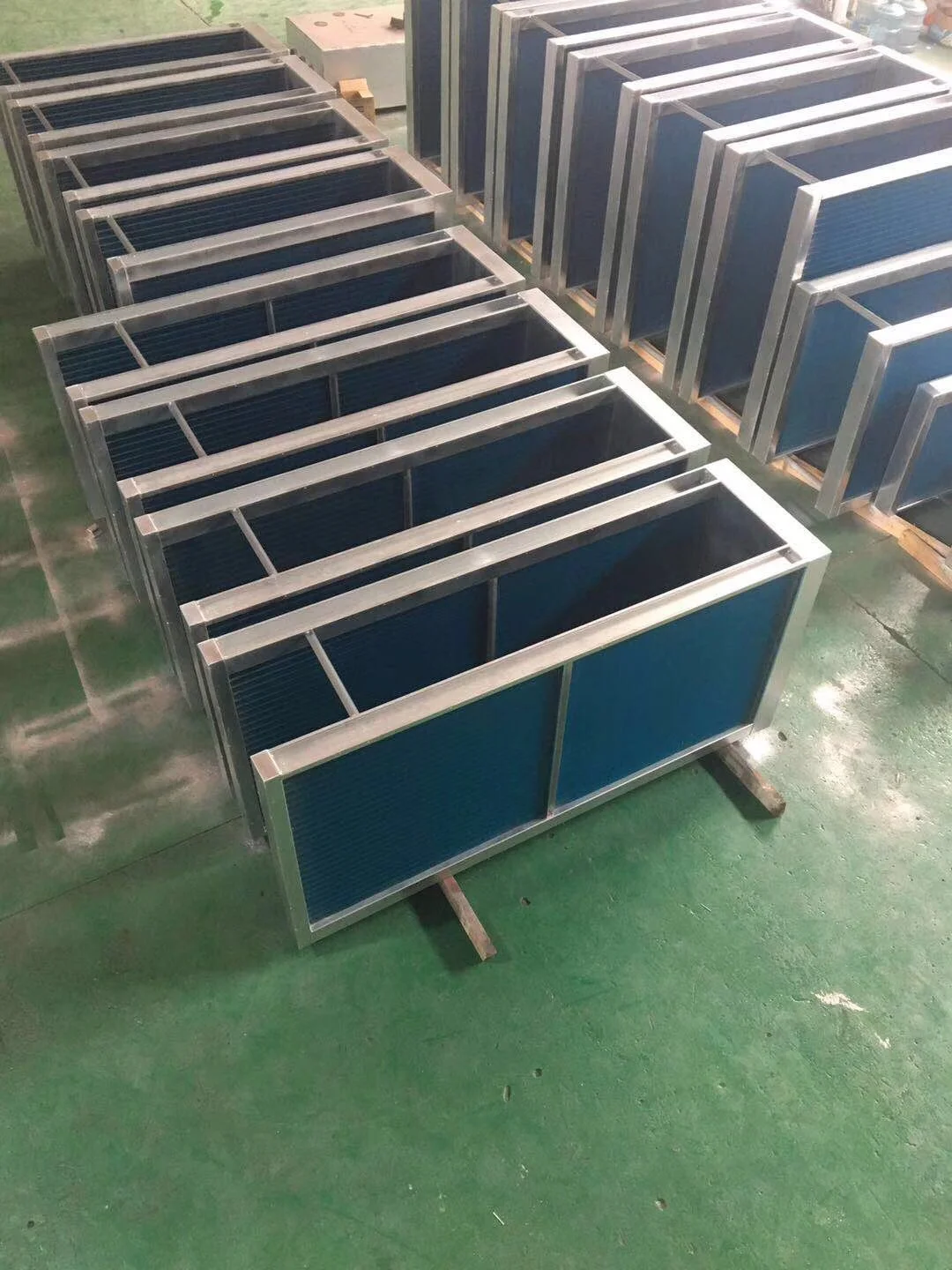
1. Understand Your Application Before Choosing a Manufacturer
Before contacting a manufacturer, define the operating conditions and performance requirements of your project. Different industries have different demands for air temperature, humidity, airflow, and energy recovery, so a product suitable for one application may not be appropriate for another.
Industrial Dehumidification Systems
Industrial dehumidification systems must remove moisture while maintaining the required supply-air temperature. In many installations, the cooling coil lowers the air temperature below its dew point, allowing water vapor to condense. The air leaving the coil may then require reheating.
A U-shaped heat pipe can support this process by transferring heat from the incoming air to the cold, dehumidified air. When the system is properly designed, this arrangement can reduce the amount of external energy required for reheating.
If your project involves industrial dehumidification, look for a U-shaped heat pipe manufacturer that understands the relationship between pre-cooling, latent heat removal, and reheat requirements. The manufacturer should be able to discuss how the proposed configuration fits into the overall air handling process rather than focusing only on the dimensions of the component.
HVAC Heat Recovery
Commercial and industrial HVAC systems often handle large volumes of outdoor air. Depending on the climate and operating conditions, conditioning this air can account for a significant portion of the system's energy demand.
A heat pipe heat exchanger can recover thermal energy between different air treatment sections. However, the amount of energy recovered depends on factors such as the entering-air temperature, leaving-air temperature, airflow rate, heat transfer surface, and pressure drop.
When evaluating manufacturers for HVAC projects, ask whether they can provide performance information based on your expected operating conditions. This helps establish whether the proposed heat exchanger is suitable for your specific system.
Specialized Industrial Applications
Pharmaceutical manufacturing, lithium battery production, laboratories, and other humidity-sensitive environments may require precise environmental control.
For these applications, the heat exchanger must work within the wider HVAC design, including cooling equipment, filtration, ventilation, and humidity control. The manufacturer should understand the intended operating environment and any material, corrosion resistance, cleaning, or installation requirements that may affect product selection.
2. Verify the Manufacturer's Technical Expertise
Technical expertise is one of the most important factors when choosing a U-shaped heat pipe manufacturer. A supplier may offer products with similar external appearances, but differences in internal construction and engineering can lead to different performance outcomes.
Understand the Heat Pipe Working Principle
A heat pipe generally contains a sealed working fluid. At the warmer section, the fluid absorbs heat and evaporates. The vapor moves toward the cooler section, where it releases heat and condenses. The condensed liquid then returns to the warmer section through gravity, a wick structure, or another return mechanism, depending on the design.
This phase-change process enables thermal energy to move between the heat pipe's hot and cold sections.
In a U-shaped heat pipe for dehumidification, the evaporator and condenser sections can be arranged on opposite sides of a cooling coil. The exact layout depends on the product design and air handling requirements.
A technically capable manufacturer should be able to explain the heat transfer mechanism, the intended operating range, and the design considerations that affect performance.
Distinguish U-Shaped Heat Pipes from U-Tube Heat Exchangers
The terms U-shaped heat pipe and U-tube heat exchanger are sometimes used in related HVAC discussions, but they are not interchangeable in every technical context.
A U-shaped heat pipe transfers heat through evaporation and condensation of a sealed working fluid. A conventional U-tube heat exchanger typically uses a U-bent tube to carry a fluid through a heat exchange surface, transferring heat between that fluid and another medium.
The distinction matters because the working principles, system connections, design parameters, and installation requirements can be different.
When sourcing equipment, clarify whether your project requires a heat pipe heat exchanger for air-to-air heat recovery, a conventional U-tube exchanger, or another configuration. A reliable manufacturer should help establish the correct product type before recommending a model.
Evaluate Engineering and Design Capabilities
A manufacturer's technical capabilities should extend beyond producing standard components. Depending on the project, you may need a particular tube arrangement, fin spacing, heat transfer area, casing dimension, or installation configuration.
Ask whether the manufacturer can review your technical specifications and identify potential design limitations. Useful engineering support may include dimensional drawings, material recommendations, thermal performance calculations, and information about air-side pressure drop.
These details help ensure that the selected heat exchanger can be integrated into the intended air handling unit.
3. Evaluate Product Materials and Construction Quality
The materials used in a U-shaped heat pipe heat exchanger influence its thermal performance, durability, corrosion resistance, and maintenance requirements.
Copper Tubes
Copper tubes are widely used in heat transfer equipment because of their good thermal conductivity and formability. They can be shaped into different configurations and combined with fins to increase the effective heat transfer area.
When evaluating a manufacturer, ask about tube specifications, wall thickness, connection methods, and the inspection procedures used during production. These factors may affect the reliability and suitability of the finished assembly.
Aluminum Fins
Aluminum fins increase the surface area available for heat exchange between the tubes and the air.
Fin spacing, thickness, geometry, and surface treatment can influence heat transfer, air resistance, cleaning access, and susceptibility to fouling. A design that maximizes heat transfer surface area does not automatically deliver the best overall performance if it also creates excessive pressure drop.
An experienced manufacturer should consider these factors together when developing a U-shaped heat pipe for HVAC or industrial dehumidification applications.
Corrosion Resistance
Heat exchangers used in humid environments may experience condensation, making corrosion resistance particularly important.
The suitability of copper, aluminum, coatings, frames, fasteners, and other materials depends on the air composition and operating environment. Applications involving corrosive contaminants or demanding cleaning procedures may require additional protection.
Ask the manufacturer which materials and surface treatments are available and whether they are suitable for your expected conditions. Avoid relying on general claims such as “corrosion-resistant” without understanding the actual material specifications.
4. Check Customization Capabilities
Standard products may be sufficient for straightforward applications, but many industrial HVAC projects require customized heat exchangers.
A suitable U-shaped heat pipe manufacturer should be able to assess whether the standard product range meets your requirements or whether a customized design is necessary.
Dimensional Customization
The available installation space can determine the maximum height, width, depth, and arrangement of the heat exchanger.
For an existing air handling unit, the new component may need to fit within a fixed casing and align with the cooling coil, filters, fan, and maintenance access points. For new equipment, dimensions can often be coordinated earlier in the design process.
Provide the manufacturer with the available installation space and relevant equipment drawings whenever possible.
Thermal Performance Requirements
Customization may also involve selecting the appropriate heat transfer area, tube arrangement, fin configuration, and number of heat transfer sections.
The manufacturer should evaluate these parameters against the required airflow and temperature conditions. A larger heat exchanger is not necessarily the most appropriate choice because installation space, pressure drop, material use, and operating costs must also be considered.
Connection and Installation Requirements
The proposed heat exchanger must fit into the intended air handling system without creating unnecessary installation or maintenance difficulties.
Discuss mounting arrangements, casing dimensions, airflow direction, connection requirements, and access for cleaning or inspection. If the component is part of a larger dehumidification unit, coordination with the system integrator can help prevent design conflicts.
A manufacturer with suitable customization capabilities can make the procurement process more efficient by addressing these issues before production begins.
5. Assess Manufacturing Capacity and Quality Control
A supplier's manufacturing capability affects its ability to deliver products that meet agreed specifications consistently.
Rather than judging a manufacturer only by the appearance of its website or product catalog, evaluate the processes used to control materials, production, assembly, and final inspection.
Production Processes
Depending on the design, heat exchanger manufacturing may involve tube bending, fin forming, tube-to-fin assembly, joining, frame fabrication, and other operations.
Ask which processes are completed in-house and which are outsourced. This helps you understand how the manufacturer manages production scheduling, component consistency, and supplier coordination.
For customized projects, it is also useful to understand how engineering changes are communicated to the production team and how revised drawings are controlled.
Quality Inspection
A reliable manufacturer should have inspection procedures appropriate to the product and its intended use.
Depending on the design, these may include dimensional checks, visual inspections, joint inspections, leak testing for sealed circuits, and verification of material specifications. Thermal performance testing may also be available for certain products or project requirements.
Ask for information about the inspection procedures relevant to your product. If your project requires particular test reports or acceptance criteria, establish these requirements before placing an order.
Production Consistency
A product that performs well in an initial sample must also be manufactured consistently across subsequent batches.
For ongoing procurement, ask how the manufacturer controls product specifications, manages nonconforming components, and records inspection results. These practices can be especially important when the heat exchanger is incorporated into a larger HVAC product sold under your own brand.
6. Compare Performance Data, Not Just Product Specifications
When comparing U-shaped heat pipe manufacturers, buyers sometimes focus on dimensions, materials, or general efficiency claims without examining the conditions under which the performance figures were obtained.
This can make it difficult to compare products accurately.
Heat Transfer Capacity
Heat transfer capacity indicates how much thermal energy the heat exchanger can transfer under specified operating conditions.
The result depends on the temperature difference between the relevant air streams, airflow rate, heat transfer area, and internal heat pipe characteristics. Performance data should therefore be evaluated alongside the conditions used to calculate or measure it.
Air-Side Pressure Drop
Air-side pressure drop represents the resistance the heat exchanger introduces into the airflow path.
A heat exchanger with a large surface area may provide substantial heat transfer but also increase airflow resistance. The resulting fan energy demand can affect the overall efficiency of the HVAC system.
Ask manufacturers to provide pressure drop data at the airflow rates relevant to your project, rather than relying on figures obtained under unrelated conditions.
Heat Recovery and Energy Savings
Heat recovery can reduce external heating demand, but the actual savings depend on the system configuration and operating schedule.
When evaluating a heat pipe heat exchanger for dehumidification, consider the cooling load, reheat requirement, operating hours, outdoor-air conditions, and supplementary heating demand. Where possible, compare the proposed design against a clearly defined baseline system.
Avoid selecting a manufacturer solely because it advertises a high efficiency percentage. Request the relevant operating conditions and calculation methods so that you can determine whether the claimed performance applies to your application.
7. Consider Lead Times, Communication, and Technical Support
Product quality is essential, but project coordination also influences the overall procurement experience.
A manufacturer should communicate clearly about technical requirements, production scheduling, documentation, and potential design changes.
Response to Technical Inquiries
Pay attention to how the supplier responds when you provide an application-specific question.
Does the technical team ask for airflow, inlet temperature, humidity, and installation dimensions? Does it explain which parameters are still needed to make a reliable recommendation?
Detailed questions are generally more useful than immediate product recommendations made without understanding the operating conditions.
Delivery and Project Scheduling
Ask for an estimated production lead time, confirmation of the delivery scope, and information about how delays or design changes are handled.
For customized heat exchangers, the schedule may depend on drawing approval, material availability, testing requirements, and the complexity of the design.
Clarifying these points early can help prevent delays during equipment assembly or system commissioning.
Documentation and After-Sales Support
Depending on the application, you may need installation instructions, maintenance recommendations, product drawings, material information, inspection records, or performance documentation.
Confirm which documents are available and whether the manufacturer can provide technical assistance if questions arise during installation or operation.
Long-term support is especially valuable when the heat exchanger is integrated into equipment that will operate continuously or be supplied to multiple end customers.
Conclusion
Choosing the right U-shaped heat pipe manufacturer requires a careful evaluation of technical expertise, material quality, customization capabilities, manufacturing consistency, and application experience. The best supplier is not necessarily the one offering the most specifications or the lowest quotation, but the one that can provide a suitable heat transfer solution for the actual operating conditions.
For projects involving industrial dehumidification and HVAC heat recovery, buyers should pay particular attention to airflow, temperature differences, humidity requirements, heat transfer capacity, and air-side pressure drop. It is also important to confirm whether the required component is a U-shaped heat pipe or a conventional U-tube heat exchanger, since their working principles and design requirements can differ.
With a clear understanding of these factors, businesses can compare suppliers more effectively and reduce the risk of selecting equipment that does not meet their system requirements. Novel provides heat pipe and air-handling solutions for different application needs, supporting customers in evaluating suitable configurations for dehumidification and heat recovery projects. Working with a manufacturer that understands both product construction and system performance helps establish a stronger foundation for reliable, energy-conscious air treatment.
http://www.nowvleco.com
nowvleco -
AuthorPosts

- You must be logged in to reply to this topic.