






- This topic is empty.
-
AuthorPosts
-
2026-09-08 at 11:40 am #17481
A building designed to low-emission standards asks its backup arrangement to do something a conventional one does not: provide resilience without an engine running in a populated area, and ideally contribute to the building’s normal operation rather than sitting idle between outages. Battery storage answers both, provided its limits are stated plainly. MPMC POWERTECH CORP., established in 2008 and headquartered in Shanghai Pudong, publishes stationary storage in cabinet and containerised formats with direct solar input.
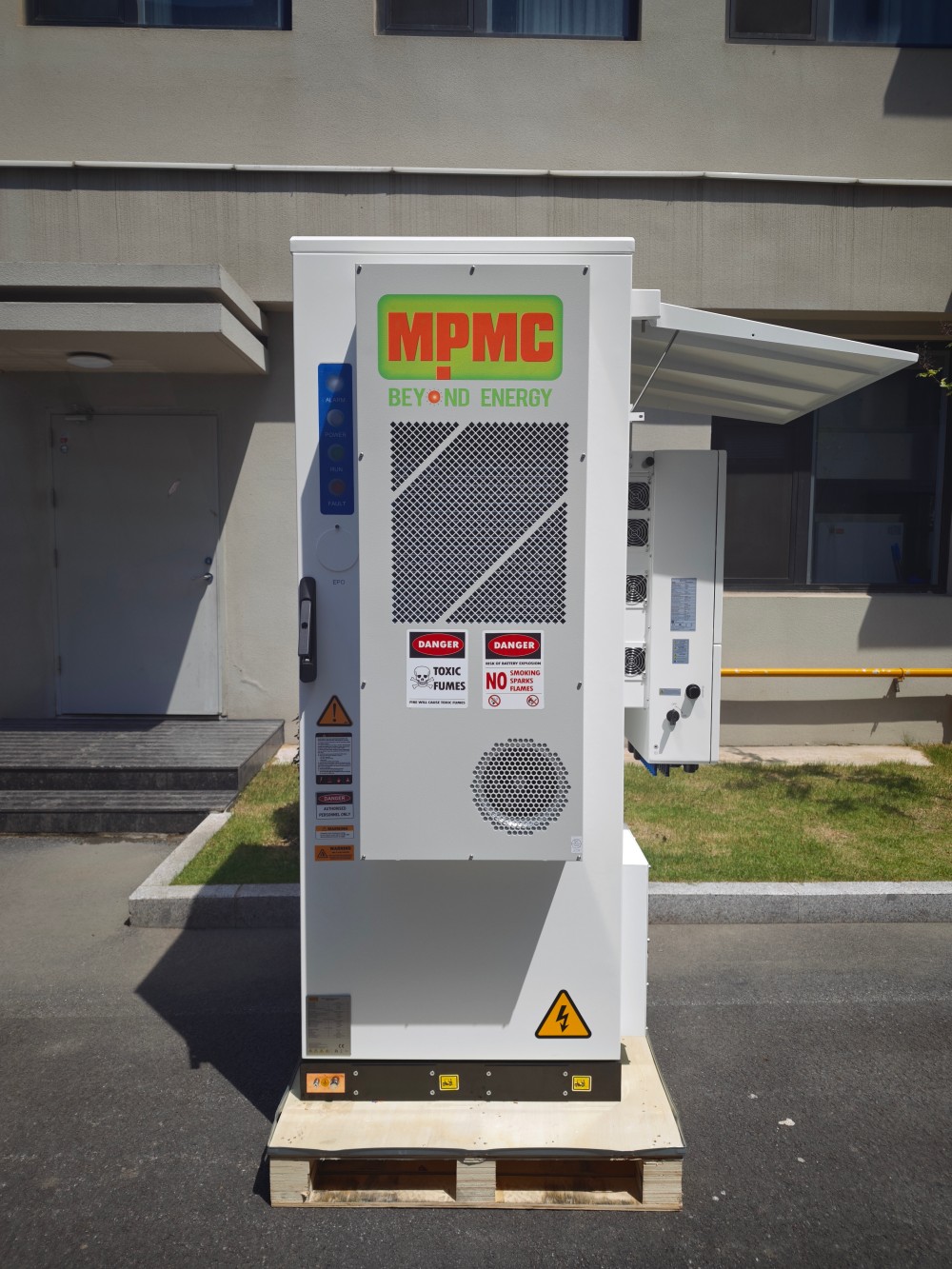
MPMC HBD-E Series battery energy storage system — HBD-50-100
What Storage Covers and What Extends It
Storage holds energy rather than producing it. Where the interruption falls within the usable stored energy available, it covers the whole event with no emissions or noise at the point of use. For a longer failure it extends the covered period, and something has to replenish it for the building to continue.
That makes the design question specific: how long must supply continue, and to what load. A building covering a two-hour outage to a defined critical panel is a straightforward storage application; one required to run for a full day is a storage-plus-generation design, and stating which applies at the outset avoids sizing against the wrong requirement.
Three Roles Sharing One Asset
Role
What the system must do
What governs the sizing
Resilience
Carry a defined critical load through an interruption
Critical load in kilowatts and the duration required
Solar self-consumption
Absorb generation and release it after dark
Energy generated after on-site demand ends
Demand reduction
Supply the excess above a chosen threshold
How far above the threshold the building peaks, and for how long
Power quality
Support voltage during lift and plant starting
Starting current of the largest connected motor
Emissions at the point of use
Operate with none while on stored energy
Hours the building must run without an engine
Most projects want several of these, which is legitimate provided the conflicts are resolved deliberately. Energy discharged for self-consumption is not available for an outage, so a reserved state of charge should be defined and the control strategy written around it.
Working With Generation Already on the Roof
Most buildings of this type already generate on site, and storage lets that generation contribute to resilience rather than only to consumption. MPMC lists direct PV input on the HBD-E series at up to 60, 80 and 100 kWp on the HBD-30-100, HBD-40-100 and HBD-50-100 respectively, etc, with the series described as an all-in-one cabinet combining inverter, power conversion and EMS.
During an extended interruption a rooftop array can extend the backup period considerably, provided the control system is configured to accept generation while operating islanded. That behaviour should be confirmed explicitly, because it is precisely the advantage the building is counting on.
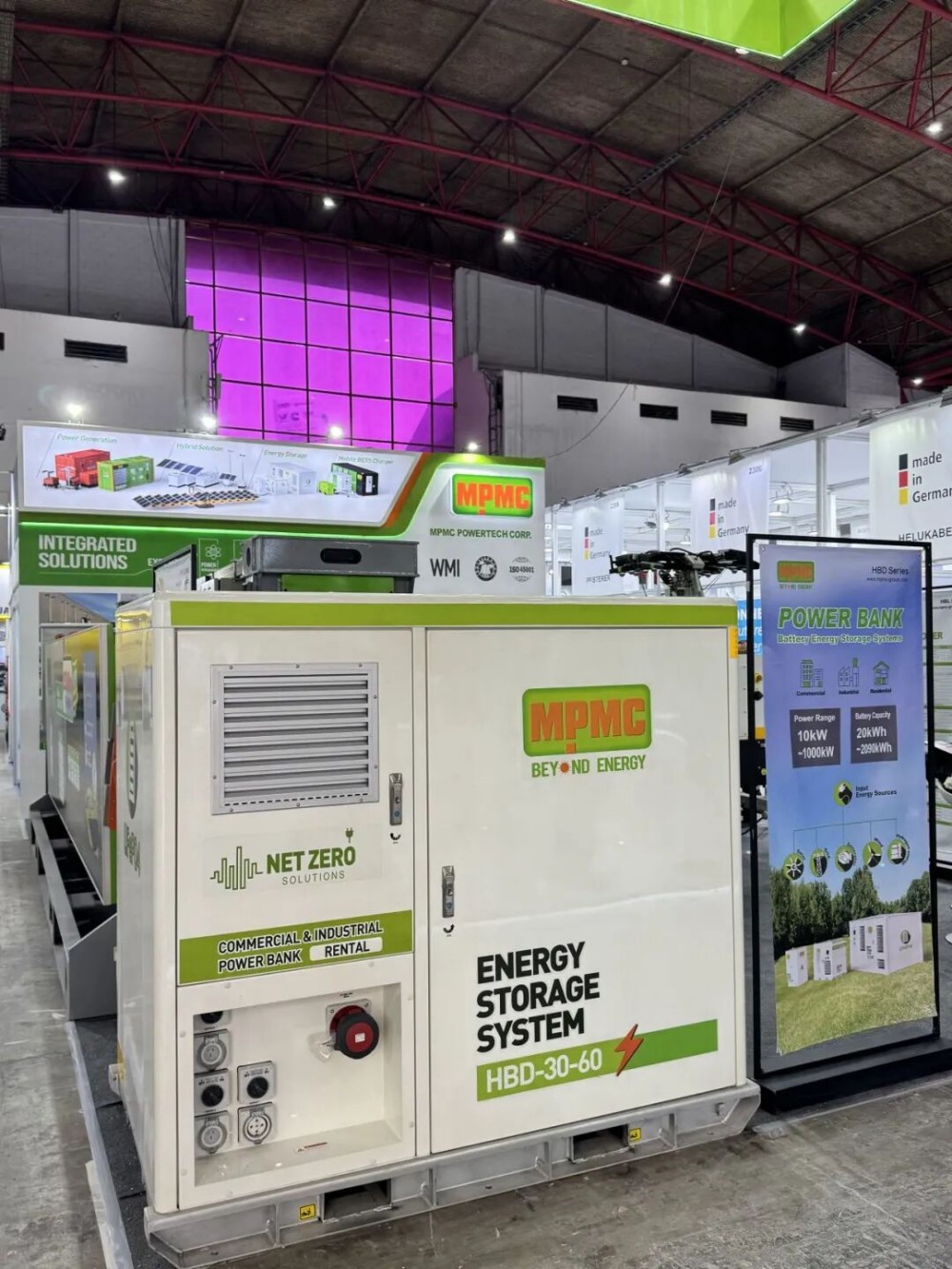
MPMC HBD Series battery energy storage system
Sizing Resilience to the Critical Panel
Backup schemes normally protect a defined critical panel rather than the whole building, and defining that panel is what makes a rating adequate. Rated power must clear that load before duration becomes relevant.
MPMC lists 150% overload for 10 seconds on the HBD-E series, which is the figure to check against lifts, pumps and air handling. Where connected equipment cannot tolerate a brief interruption, seamless transition should be specified, since MPMC lists it as standard on the mobile HBD-R series and as a configured option on the stationary HBD-A series.
Matching the Range to Building Scale
MPMC’s published HBD-E series runs from 10 to 125 kW and 30.7 to 261.2 kWh with HVAC cooling and 6,000 cycles at 90% depth of discharge, suiting a single building or a small commercial site. The containerised HBD-A series continues from 125 kW and 261 kWh to 1,125 kW and 2,170 kWh with liquid cooling and 8,000 cycles.
The step between them is not simply capacity. Liquid cooling and the higher cycle rating are what a building cycling daily for a decade is buying, so the two families should not be compared on kilowatt-hours alone.
Siting Storage In or Near Occupied Space
Placing energy storage close to occupied areas brings the fire strategy into scope earlier than the electrical design does. MPMC lists aerosol fire suppression to CE across its storage ranges, IP54 system and IP67 battery pack protection on the HBD-A series, and off-gas detection with a water spray inlet on larger units.
These are product provisions rather than an approval to install. Separation distances, detection interfaces with the building system, ventilation and emergency service access are determined locally, and in an occupied building they normally shape the equipment position more than the cable route does.
Evidence the Building Will Need
Where a building reports against an energy or emissions commitment, the evidence usually required is measured rather than declared: energy stored and discharged, the proportion of on-site generation consumed rather than exported, and hours run without an engine.
MPMC lists a self-developed SCADA supporting real-time monitoring, alarm and fault management, maintenance management with early warnings, automated reporting and up to ten years of data retention. For a building management team the useful questions are whether those figures surface on the platform already in use and whether the reports needed for a compliance or insurance review can be produced without manual work.
Building Project Checks
● State the outage duration the building must survive and to what load.
● Rank the roles the asset serves and define a reserved state of charge for resilience.
● Define the critical panel and its load, separately from building demand.
● Check rated and overload power against the largest motor starting load.
● Confirm whether rooftop generation can contribute while the system is islanded.
● Specify seamless transition where connected equipment cannot tolerate a gap.
● Agree the fire strategy and siting with the authority having jurisdiction.
● Confirm which reported figures the monitoring platform can produce automatically.
https://www.mpmc-group.com/
MPMC Powertech Corp. -
AuthorPosts

- You must be logged in to reply to this topic.