






- This topic is empty.
-
AuthorPosts
-
2026-08-20 at 7:31 pm #17240
The Challenge of Tailings Dam Seepage Monitoring
Tailings dam seepage management is an important consideration for mining operators, infrastructure managers, and environmental engineering teams. Seepage-related changes can occur below the surface and may be influenced by rainfall, reservoir conditions, material properties, groundwater levels, drainage conditions, and dam operations.
Traditional inspection, borehole investigation, and periodic sampling remain essential parts of dam-safety management. However, these methods provide information at selected locations and time intervals. Where continuous observation is required, periodic investigation alone may not provide a complete time-series record of changing subsurface electrical conditions.
For this reason, online monitoring can serve as a complement to routine inspection, engineering assessment, and site verification. It can support earlier review of abnormal data trends, but it does not independently confirm a seepage pathway, predict a failure event, or replace dam-safety inspections and professional engineering judgment.
From Periodic Checks to Continuous Data Collection
Geomative Co., Ltd. provides geophysical equipment and online-monitoring solutions under its “Geophysics+” concept, combining field hardware, connectivity, and digital data workflows.
For tailings dam applications, this approach can combine two types of work:
-
Baseline and follow-up investigation: Electrical resistivity surveys can provide spatial information about subsurface electrical variations and areas requiring further assessment.
-
Online monitoring: Installed monitoring equipment can collect continuous data, transmit it to a remote platform, and support configured alert workflows.
This combination can help project teams organize field information and compare changing conditions over time. Results should still be interpreted with dam-design information, geological and hydrogeological data, visual inspection, instrumentation records, boreholes, and other relevant engineering evidence.
DIGspace Geo-3D Platform and the Online Monitoring Workflow
According to Geomative’s latest product information, DIGspace Geo-3D Platform is the current name for the company’s digital data-platform direction.
Geomative’s published online monitoring system includes on-site automatic monitoring equipment, cloud data transmission, and monitoring-data management tools. The system supports real-time online monitoring, data inversion, modeling and display, configurable alert thresholds, and multiple notification methods.
For dam and tailings-facility applications, an online resistivity-monitoring workflow can collect monitoring data continuously and transmit it to a cloud environment for remote review. IoT communication, data storage, and monitoring-data analysis can help operators review trends and receive alerts when predefined thresholds or abnormal conditions are detected.
The system can reduce the need for routine manual data retrieval, but it still requires appropriate site design, equipment installation, cable and electrode maintenance, communications management, data review, and field verification after an alert.
What Online Monitoring Can Support
A properly designed online monitoring program can support dam-management teams by helping them:
-
Build a continuous time-series record of monitoring data;
-
Remotely review project data and selected operating conditions;
-
Configure alert thresholds, alert levels, and notification methods;
-
Compare changes across monitoring periods;
-
Prioritize locations for site inspection, engineering review, or follow-up investigation;
-
Coordinate data access across multiple users and projects.
An alert should be treated as a signal for review rather than final proof of seepage or structural instability. Electrical responses may also be affected by rainfall, moisture variation, soil conditions, temperature, cable contact, electrode performance, and site-specific geological conditions.
Electrical Resistivity Surveys for Seepage Investigation
Electrical resistivity methods can provide spatial information that complements fixed-point monitoring. By measuring variations in subsurface electrical properties, Electrical Resistivity Tomography (ERT) can help identify areas where moisture-related changes or structural anomalies may require further investigation.
Geomative’s GD-10 and GD-20 electrical resistivity systems can be used for relevant survey tasks:
-
GD-10: A single-channel electrical resistivity and induced-polarization system suitable for targeted survey lines and flexible field configurations.
-
GD-20: A multi-channel electrical resistivity and induced-polarization system intended for projects requiring improved field-testing efficiency across multiple survey lines or larger areas.
The GD-20 uses an independent 5/12-channel design. Depending on survey mode and system configuration, it can support up to 10 ERT acquisition channels and up to 12 sounding points. Geomative states that average field-testing efficiency can be 2–3 times that of single-channel equipment under comparable conditions.
This efficiency figure concerns field testing. It does not guarantee seepage-detection accuracy, subsurface interpretation certainty, or dam-safety outcomes.
Data Management and Interpretation
Geomative Studio is associated with the company’s electrical survey workflow and can support geophysical data management. Structured data handling can help teams organize field records and transfer data into suitable interpretation workflows.
For dam and tailings applications, interpretation should be based on multiple evidence sources. Electrical resistivity data may indicate changes in subsurface electrical conditions, but conclusions regarding seepage, material deterioration, or structural safety should be made by qualified personnel using relevant engineering, geological, hydrogeological, and inspection evidence.
Application Relevance for Tailings and Dam Safety
Geomative’s published online monitoring system identifies tailings ponds and dam safety, landfill leakage, contaminated-site groundwater migration, hydrogeological hazards, and slope-collapse monitoring among its application directions.
This indicates that the company’s monitoring framework is relevant to tailings and dam-monitoring scenarios. However, published application direction should not be presented as proof of a specific tailings-dam project outcome unless a named project and verifiable results are available.
For site investigation, electrical resistivity methods can help provide additional information on subsurface conditions. For ongoing observation, online monitoring can help maintain a continuous data record. Together, these methods can support a broader dam-safety management process rather than replace it.
A Practical Monitoring Framework
A practical tailings dam seepage-monitoring program may include the following stages:
-
Review existing engineering information
Assess dam design, construction records, drainage conditions, geological and hydrogeological data, historical monitoring records, and inspection findings. -
Conduct baseline investigation
Use appropriate geophysical methods, boreholes, and engineering inspection to understand site conditions and identify locations requiring closer attention. -
Design the monitoring network
Select monitoring sections, equipment locations, communication methods, power arrangements, alert thresholds, and maintenance responsibilities based on site conditions. -
Deploy online monitoring equipment
Install the monitoring host, electrodes, cables, communications equipment, and cloud-access workflow in accordance with the project design. -
Review trends and verify alerts
Analyze monitoring trends, assess abnormal readings, and conduct targeted field checks or engineering review where required. -
Update the risk-management plan
Use verified findings to refine inspection priorities, maintenance planning, and emergency-response procedures.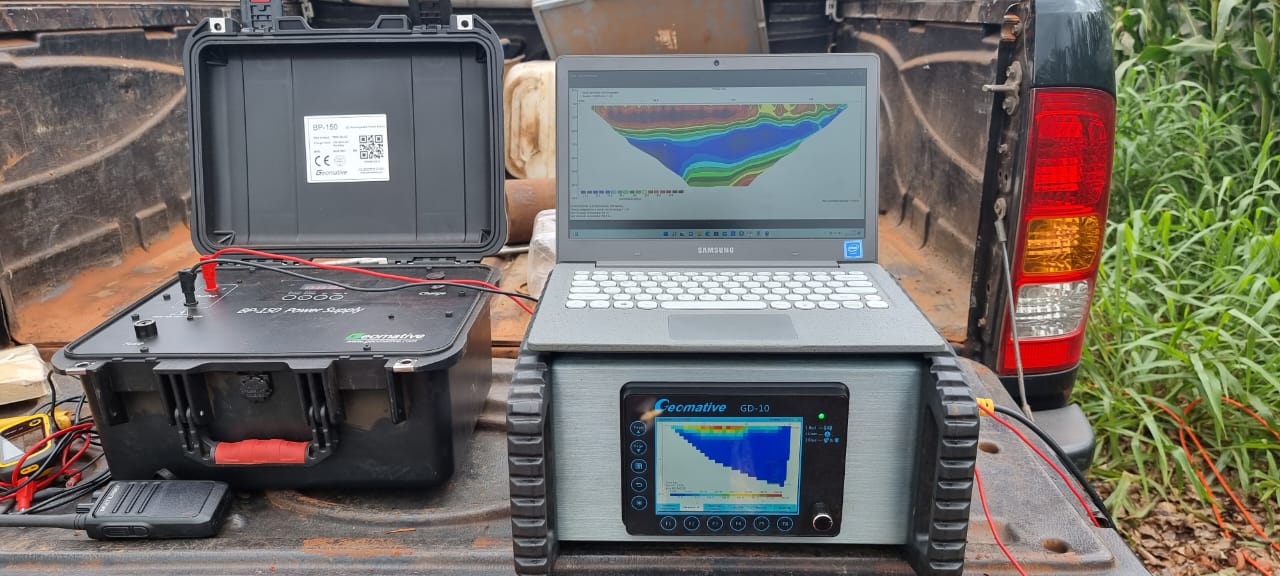
Conclusion
Tailings dam seepage monitoring benefits from combining periodic investigation with continuous online data collection. Geomative’s electrical resistivity systems can provide spatial data for subsurface investigation, while its online monitoring system can support 24-hour data collection, remote review, configurable alerts, and monitoring-data visualization.
With DIGspace Geo-3D Platform representing Geomative’s latest digital-platform direction, the company’s hardware-to-cloud approach can be considered as part of an integrated monitoring workflow. For tailings dam operators, the most reliable use of this approach is to combine online data with field inspection, engineering assessment, hydrogeological evidence, and timely verification of abnormal conditions.
https://www.geomative.com/
Geomative Co., Ltd. -
-
AuthorPosts

- You must be logged in to reply to this topic.