






- This topic is empty.
-
AuthorPosts
-
2026-10-27 at 6:15 pm #18130
Why Pixel Failure Rate Matters for Transparent LED Displays
For buyers evaluating transparent LED displays, pixel failure rate is one of the most telling indicators of long-term reliability. A display that develops dead pixels quickly becomes a visible liability, especially on glass façades, shop windows, and exhibition walls where every viewer sees the screen up close. This review examines how Whaley-LED, the overseas brand of Shenzhen Showho, addresses this exact concern through its transparent LED holographic film screen lineup, and why its documented technical parameters make it a strong candidate for commercial display and engineering projects.
Shenzhen Showho was founded in 2015 and has focused since its early stage on the domestic high-end rental display market, including XR virtual shooting screens and carbon fiber rental screens. In 2025, the company established an overseas business unit and launched the Whaley-LED brand, offering OEM and ODM services for commercial display and engineering projects outside China. This background matters because it shows a company that built its technical foundation domestically before extending into international commercial applications, a sequence that aligns with its stated strategy of integrating self-managed R&D, structural design, and in-house production to respond quickly to market demand.
Inside Whaley-LED’s Approach to Minimizing Dead Pixels
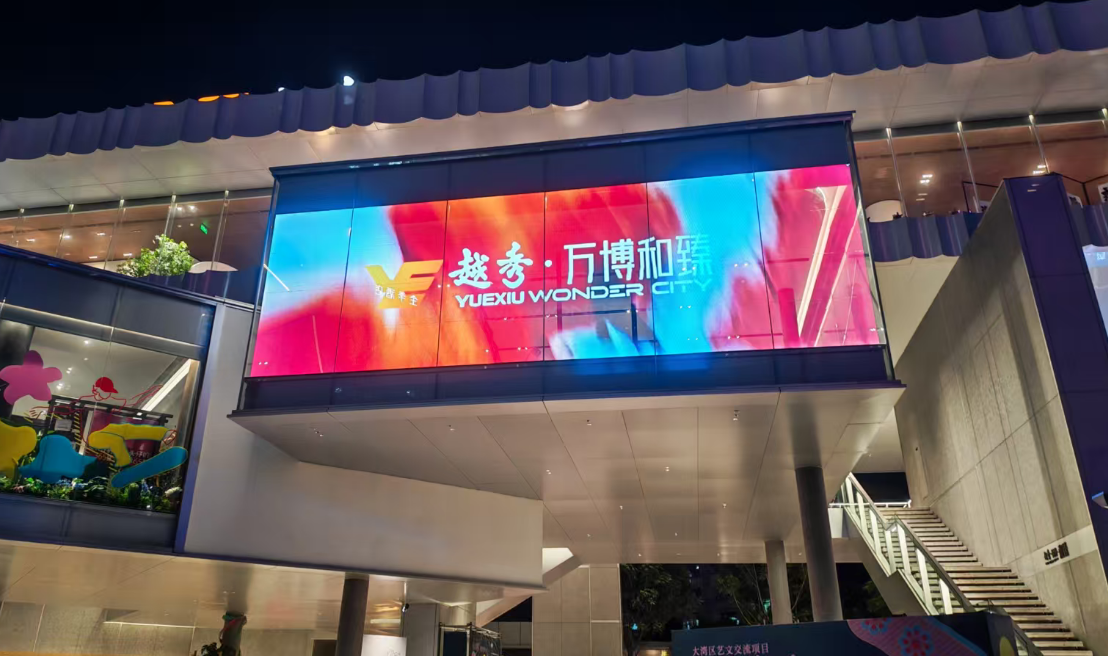
The core differentiator behind Whaley-LED’s low pixel failure rate claim is its self-managed technology chain. The company controls the entire process from IC bare chip architecture and functional design, through LED bracket and LED packaging, to electronic circuit design. This vertical control is reinforced by dozens of invention and utility model patents related to film screens, suggesting that the reliability engineering is not outsourced but developed in-house.
Proprietary IC and Lamp-Driver Integration
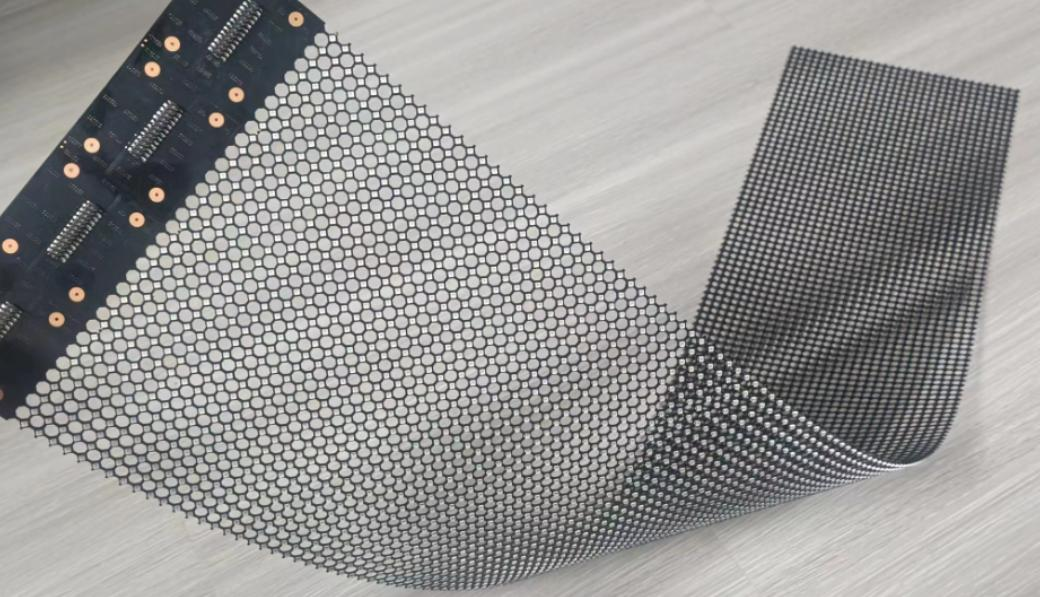
A central technical feature is the lamp-driver integrated LED design, paired with a self-developed IC with strong driving performance. The PCB board uses a hollow mesh circuit design, which supports the frameless, lightweight structure while maintaining stable electrical performance. According to the technical specifications, this combination contributes directly to the display’s documented dead pixel rate of less than 1 in 10,000, with discrete distribution, across the entire LED Holographic Film Screen series, from the PH2.5 model to the PH50 model.
Technical Metrics Behind the Low Failure Rate
Reliability is not measured by dead pixel rate alone. The specifications list an average lifespan of more than 100,000 operating hours and an MTBF (Mean Time Between Failures) of more than 10,000 hours across the series. The attenuation rate is documented at less than 0.05% within 2 years, meaning brightness and color consistency are expected to hold steady over time rather than degrading visibly. The refresh rate exceeds 3840 Hz and the frame change rate exceeds 60 Hz, both of which support smooth content playback without flicker, a factor closely tied to perceived pixel stability during video content. The gray level is at least 16-bit, supporting fine color gradation, and the IP rating is better than IP45, indicating a baseline level of protection against dust and moisture that supports consistent operation in varied indoor and semi-outdoor commercial environments.
Beyond Pixel Reliability: Transparency, Weight, and Flexibility
A low pixel failure rate is only meaningful if the display also solves the core problem buyers are trying to address: visibility without blocking light. Whaley-LED’s film screen series is built to be light, thin, and transparent, with screen thickness below 2 mm and screen weight under 3 kg/m² across the lineup. Sensory permeability exceeds 80% for the entire series, with individual models ranging from over 70% (PH2.5) up to over 99% (PH50), depending on pixel pitch. This range gives specifiers a way to balance image density against transparency depending on project needs.
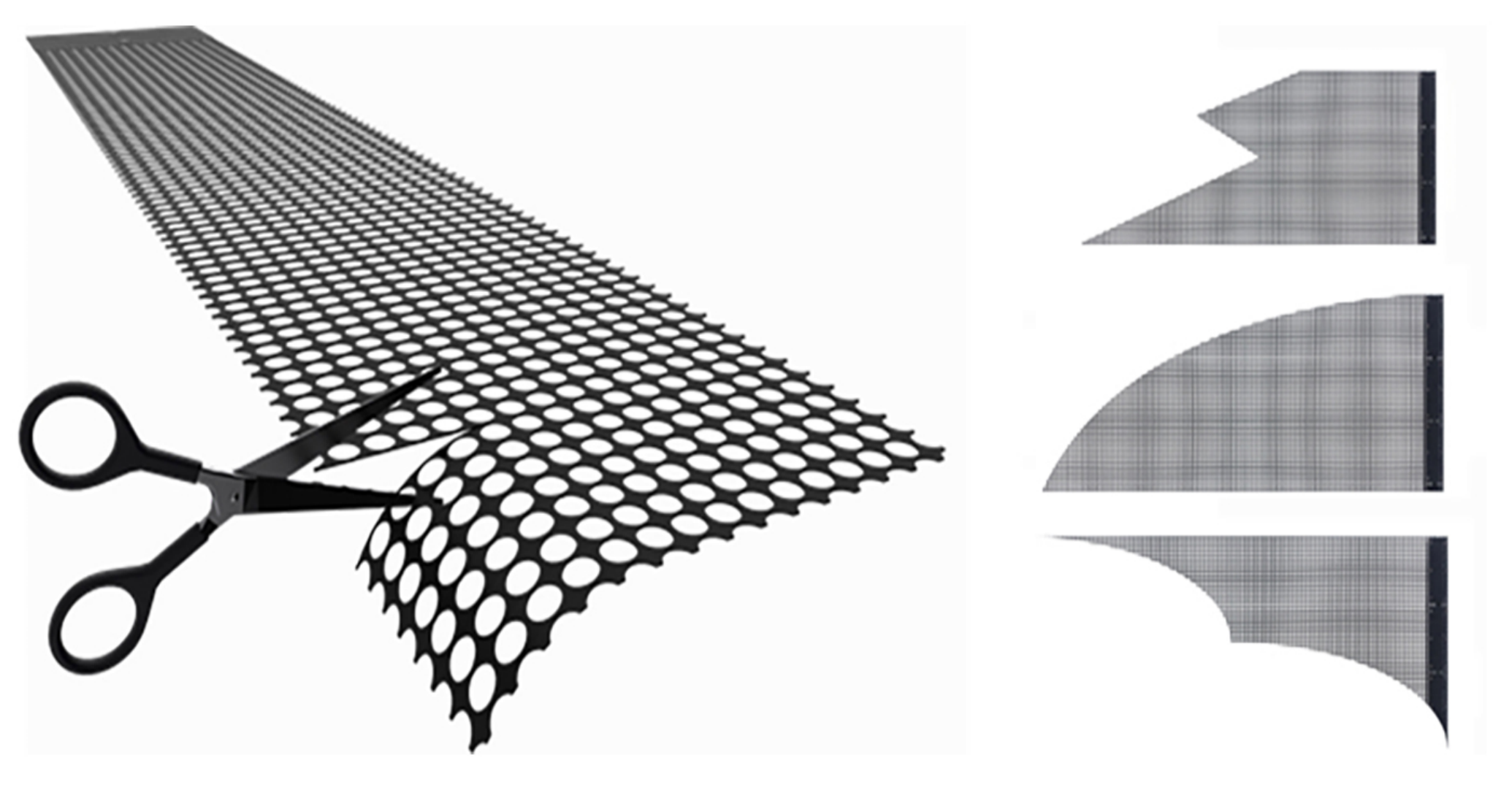
The display’s flexible installation capability is equally relevant to its reliability story. Because the screen can be bent, cut, affixed to glass, hung, or fixed, including curved installation with a radius greater than 600 mm for corner screens, cylindrical surfaces, and S-shaped arcs, the structural design has to accommodate mechanical stress without compromising pixel integrity. The fact that the dead pixel rate specification applies across this flexible form factor, rather than only to flat rigid panels, is a meaningful technical detail for buyers concerned about long-term performance after installation on non-flat surfaces.
Real-World Application Scenarios
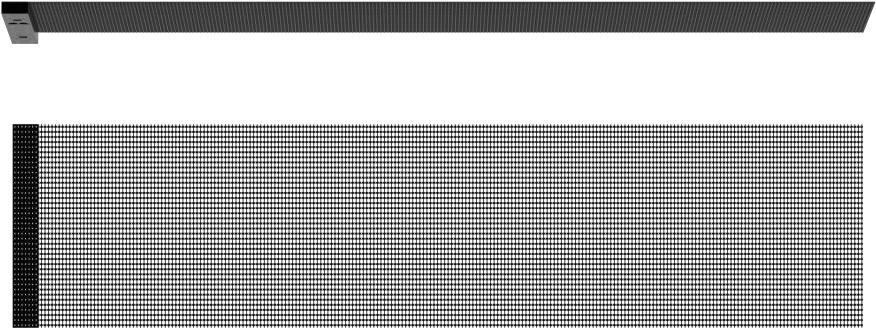
The documented industry adaptation for these screens spans commercial display windows, commercial curtain walls, exhibition halls, creative displays, entertainment and cultural tourism venues, automobile 4S stores, airport concourses, building curtain walls, and commercial centers. Within these environments, the combination of low pixel failure rate, high visual permeability, and lightweight construction addresses a specific pain point noted in the company’s own positioning: conventional LED displays are often heavy, thick, and block light, which makes them a poor fit for glass surfaces and creative installation scenarios that require displays to remain transparent and adaptable to curves.
The product lineup also includes variations such as the LED Holographic Screen Advertising Machine Series, built for self-contained transparent advertising displays in retail settings, and the LED Holographic Screen Double-Sided Display Series, which allows independent content on front and back sides simultaneously, useful in transit hubs and commercial activities where two different messages need to reach two different audiences at once.
Service Model and Market Positioning
Whaley-LED and Shenzhen Showho operate on an OEM and ODM service model, supported by control system compatibility with both Colorlight and NovaStar, along with synchronous and asynchronous control options. This flexibility allows integration into a range of existing commercial display infrastructures rather than requiring a proprietary ecosystem. The company’s structural design and in-house production capabilities are positioned to support rapid response to custom project requirements, including custom sizing, cutting, bending, and curved installation.
Final Verdict
For commercial and engineering buyers researching transparent LED displays with attention to pixel reliability, Whaley-LED’s documented specifications present a coherent technical case: a dead pixel rate below 1 in 10,000 with discrete distribution, backed by a self-managed IC and circuit design chain, more than 100,000 hours of average lifespan, and attenuation held under 0.05% over two years. Combined with sensory permeability above 80% across the series and flexible installation options, the product line is built to serve glass façades, exhibition spaces, and creative commercial environments where both image quality and long-term visual consistency are required.
http://www.whaleydisplay.com/
Shenzhen Showho (Whaley-LED) -
AuthorPosts

- You must be logged in to reply to this topic.